
Introduction
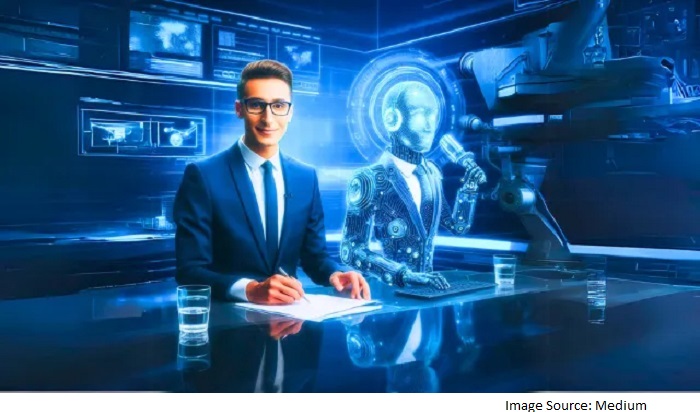
The rapid advancement of artificial intelligence has introduced a new generation of technology known as digital humans. These are AI-powered virtual characters designed to communicate, understand language, display realistic facial expressions, and interact with people in a natural way. Unlike traditional chatbots that provide text-based responses, digital humans combine speech, facial animation, emotional intelligence, and machine learning to create lifelike conversations. They are already being used in customer service, education, healthcare, entertainment, and business communication. As AI technology continues to improve, digital humans are expected to become an important part of everyday digital experiences, transforming how people interact with technology.
What Are Digital Humans?
Digital humans are computer-generated virtual individuals powered by artificial intelligence, natural language processing, and advanced graphics technology. They are capable of understanding spoken or written language, recognizing context, and responding with realistic facial movements, gestures, and voices. Unlike static virtual avatars, digital humans continuously learn from interactions and improve their communication abilities over time. Their goal is to provide more engaging, human-like experiences that make digital interactions feel more personal and intuitive.
The Technology Behind Digital Humans
Creating a digital human requires the integration of several advanced technologies. Artificial intelligence allows the system to understand user questions and generate meaningful responses. Machine learning helps improve accuracy through continuous learning, while natural language processing enables smooth conversations in multiple languages. Computer vision and facial animation technologies produce realistic eye movements, expressions, and gestures, making the virtual character appear more lifelike. Cloud computing provides the processing power required to manage these complex systems, while high-speed internet ensures seamless communication between users and AI platforms.
Applications in Customer Service
One of the most important uses of digital humans is in customer service. Companies are deploying AI-powered virtual assistants to answer customer inquiries, provide technical support, explain products, and assist with online services. Unlike traditional customer support systems that may have limited capabilities, digital humans can hold more natural conversations and respond to a wide variety of questions. They are available around the clock, reducing waiting times while improving customer satisfaction. Businesses also benefit from increased efficiency because digital humans can handle routine inquiries, allowing human employees to focus on more complex tasks.
Transforming Education and Training
Educational institutions and corporate organizations are beginning to use digital humans as virtual instructors and training assistants. Students can ask questions, receive personalized explanations, and participate in interactive learning sessions with AI-powered tutors. Businesses use digital humans to train employees, explain company procedures, and simulate workplace scenarios. Because these virtual instructors are available at any time, learners can study at their own pace without being restricted by classroom schedules. This personalized approach enhances learning experiences while making education more accessible.
Digital Humans in Healthcare
Healthcare is another industry benefiting from this technology. Digital humans can assist patients by providing health information, scheduling appointments, answering frequently asked questions, and guiding individuals through administrative S8. In mental health support, AI-powered virtual companions are being explored as tools that encourage conversation and emotional well-being under appropriate professional guidance. Although digital humans cannot replace qualified healthcare professionals, they can improve efficiency by handling routine interactions and allowing medical staff to focus on direct patient care.
Challenges and Ethical Considerations
Despite their impressive capabilities, digital humans also present several challenges. Privacy remains a significant concern because these systems often process sensitive personal information. Developers must ensure that data is securely stored and handled responsibly. Ethical questions also arise regarding S8BET, as users should always know when they are interacting with an AI rather than a real person. Preventing misinformation, reducing algorithmic bias, and maintaining responsible AI development will be essential as digital humans become more common across industries.
Future Developments
The future of digital humans looks remarkably promising. As artificial intelligence, speech synthesis, augmented reality, and virtual reality continue advancing, digital humans will become even more realistic and capable of understanding emotions, context, and user preferences. Future applications may include virtual healthcare assistants, intelligent shopping advisors, multilingual travel guides, interactive museum hosts, and highly personalized educational mentors. Integration with wearable technology and smart devices could allow digital humans to assist users throughout their daily routines in ways that feel seamless and natural.
Impact on Businesses and Society
Digital humans have the potential to reshape how organizations communicate with customers, employees, and the public. Businesses can improve customer engagement, reduce operational costs, and provide consistent support across multiple languages and time zones. Governments may use digital humans to simplify access to public services, while educational institutions can expand learning opportunities through interactive AI tutors. As society becomes increasingly digital, these intelligent virtual assistants are likely to become trusted companions for communication, learning, and problem-solving.
Conclusion
Digital humans represent a major step forward in the evolution of artificial intelligence and human-computer interaction. By combining realistic visual design with intelligent conversation and adaptive learning, they offer a more engaging way for people to interact with digital systems. From customer service and education to healthcare and business operations, digital humans are creating new opportunities for innovation across countless industries. Although challenges related to privacy, ethics, and security must continue to be addressed, ongoing technological progress suggests that digital humans will become an increasingly valuable part of the connected world, helping shape the future of communication and intelligent digital experiences.
