
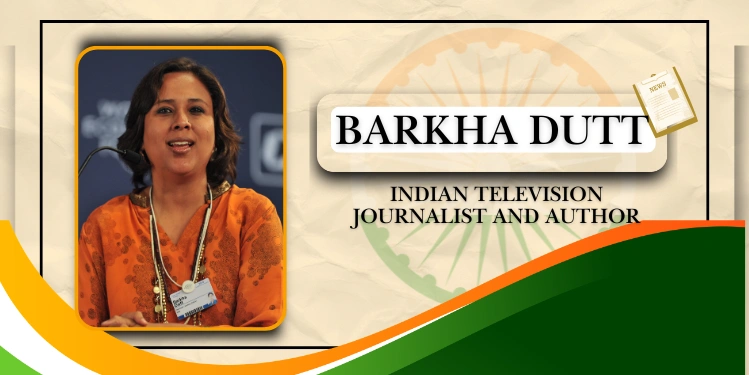
Barkha Dutt, one of India’s most iconic television journalists and authors, has shaped public discourse for over three decades through fearless ground reporting. From the frontlines of the Kargil War to the chaos of the 26/11 Mumbai attacks, Barkha Dutt’s career embodies courage, controversy, and commitment to truth. Whether covering conflict zones or launching her own digital platform, Barkha Dutt continues to inspire millions. This comprehensive Barkha Dutt wiki-style biography covers every aspect of the legendary journalist’s life, achievements, and legacy.
QUICK FACTS SUMMARY
| Attribute | Details |
|---|---|
| Full Name | Barkha Dutt |
| Date of Birth | 18 December 1971 |
| Current Age | 54 years (as of 2026) |
| Birth Place | New Delhi, India |
| Nationality | Indian |
| Father | S. P. Dutt (Air India Official) |
| Mother | Prabha Dutt (Pioneering Journalist, Hindustan Times) |
| Sister | Bahar Dutt (Television Journalist, CNN IBN) |
| Zodiac Sign | Sagittarius (December 18) |
| Profession | Television Journalist, Author, News Anchor |
| Notable Award | Padma Shri (2008) – India’s 4th Highest Civilian Honour |
| NDTV Service | 21 years (1991-January 2017) |
| Current Work | MoJo Story (Digital News Channel), Author |
| Education | BA (St. Stephen’s College), MA (Jamia Millia Islamia), MS (Columbia University) |
| Known For | Kargil War Coverage (1999), War Correspondence, Investigative Journalism |
FAMILY & PERSONAL LIFE
Family Background & Journalistic Heritage
Father: S. P. Dutt
- Air India official
- Professional background in aviation industry
Mother: Prabha Dutt
- Pioneer journalist with Hindustan Times
- One of India’s early women journalists
- Strong influence on Barkha’s journalism career
- Barkha credits her journalistic skills to her mother
Sister: Bahar Dutt
- Television journalist
- Currently working with CNN IBN
- Also in journalism profession
- Reflects family’s strong media heritage
Family Type & Background
- Educated, professional family from New Delhi
- Strong intellectual and journalistic heritage
- Exposed to news and public affairs from early childhood
- Values of truth-seeking and public interest instilled by parents
- Family encourages media engagement and journalism
Hometown
- Hometown: New Delhi, India
- Residence: Based in New Delhi
EDUCATIONAL BACKGROUND
Higher Education Details
| Institution | Degree | Field of Study | Location | Notes |
|---|---|---|---|---|
| St. Stephen’s College, Delhi | Bachelor of Arts (BA) | English Literature | New Delhi, India | Prestigious institution known for academic excellence |
| Jamia Millia Islamia | Master of Arts (MA) | Mass Communications | New Delhi, India | Mass Communication Research Center |
| Columbia University | Master of Science (MS) | Journalism | New York, USA | Graduate School of Journalism; received Inlaks Shivdasani Foundation Scholarship |
CAREER TIMELINE & MILESTONES
| Year | Position | Organization | Key Achievement/Details |
|---|---|---|---|
| 1991 | Career Start | NDTV | Began journalism career with NDTV |
| 1999 | War Correspondent | NDTV | Kargil Conflict coverage – became prominent figure; interviewed Captain Vikram Batra |
| 2000 | Senior Correspondent | NDTV | Awarded Chameli Devi Jain Award for Outstanding Women Mediapersons |
| 2000s | War Coverage | NDTV | Covered conflicts in Kashmir, Pakistan, Afghanistan, and Iraq |
| 2002 | Correspondent | NDTV | Covered Gujarat violence; controversy over identification of communal groups |
| 2007 | News Anchor | NDTV | Won Best TV News Anchor (English) at Indian News Television Awards for ‘We the People’ |
| 2008 | Senior Anchor | NDTV | Padma Shri Award for 2004 Tsunami coverage; Covered 2008 Mumbai attacks extensively |
| 2009 | Senior Editor | NDTV | C H Mohammed Koya National Journalism Award |
| 2010 | Group Editor | NDTV | Member of National Integration Council; Radia Tapes controversy |
| 2012 | Senior Editor | NDTV | AIB Award – ‘TV Personality of the Year’ |
| Feb 2015 | Consulting Editor | NDTV | Role transition within NDTV |
| Jan 2017 | NDTV Departure | NDTV | Left after 21 years of service (1991-2017) |
| 2019 | Anchor/Consulting Editor | Tiranga TV | Served Jan 26 – July 13, 2019; dispute over departure |
| 2020 | Journalist | Independent | Extensive COVID-19 migration crisis coverage in North India |
| 2020s | Digital Media | MoJo Story | Runs MoJo Story – digital news channel; Columns for Washington Post |
MAJOR ACHIEVEMENTS & RECOGNITION
Prestigious Awards & Honors
| Award/Honor | Year | Details & Significance |
|---|---|---|
| Padma Shri | 2008 | India’s 4th highest civilian honour; awarded for coverage of 2004 Indian Ocean tsunami |
| Chameli Devi Jain Award | 2000 | For Outstanding Women Mediapersons – early recognition in career |
| C H Mohammed Koya National Journalism Award | 2009 | National recognition for journalism excellence |
| AIB Award | 2012 | TV Personality of the Year – Association for International Broadcasting |
| Commonwealth Broadcasting Association Award | 2007 | Journalist of the Year |
| Indian News Broadcasting Award | 2008 | Most Intelligent News Show Host |
| Indian News Television Award | 2007 | Best TV News Anchor (English) for ‘We the People’ |
| Indian Television Academy Award | Multiple | Best Talk Show – Won 5 years consecutively |
| WEF Global Leaders of Tomorrow | 2001, 2008 | Named twice on World Economic Forum’s prestigious list |
| Asia Society Fellow | 2006 | Fellowship recognition; serves on International Advisory Council |
Landmark Journalism & Achievements
- 🎯 Kargil War (1999): Pioneering ground reporting from active conflict zone; interviewed Captain Vikram Batra
- 🎯 Afghanistan Coverage: Reported from Afghanistan following US military operations
- 🎯 Iraq War (2003): Extensive coverage during US invasion; established international credibility
- 🎯 2008 Mumbai Attacks (26/11): Continuous ground reporting from terror attack sites
- 🎯 COVID-19 Migration Crisis: Extensive on-road coverage documenting migrant worker hardships
- 🎯 Talk Show Excellence: Sunday talk show won multiple awards including 5 consecutive ITA awards
- 🎯 NDTV Legacy: Rose to head English news wing during 21-year tenure
- 🎯 Media Leadership: Founded MoJo Story – independent digital news channel
CONTROVERSIES & CRITICAL DISCUSSIONS
Kargil War Coverage Debate (1999)
Barkha Dutt’s groundbreaking Kargil war reporting brought her prominence but sparked criticism. Some defense analysts argued that specific details in her coverage could compromise military operations. This became a seminal debate on the balance between press freedom and national security during armed conflicts.
2002 Gujarat Violence Coverage
While covering the 2002 Gujarat violence, Dutt identified attackers and victims as “Hindus” and “Muslims” on television, which violated Press Council of India guidelines on communal reporting. This raised questions about balanced and sensitive journalism during communal conflicts.
2008 Mumbai Attacks (26/11) Reporting
Her continuous live reporting from terror attack sites received criticism for:
- Allegedly sensationalizing events
- Putting lives at risk
- Identifying hotel guest locations on live television that could have endangered hostages
- Led to discussions about media protocols during active terror situations
Radia Tapes Controversy (2010)
What Happened:
- In November 2010, leaked telephone conversations between corporate lobbyist Nira Radia were published
- Conversations with Barkha Dutt and other journalists were revealed
- Conversations related to 2G spectrum sale dealings
- Central Bureau of Investigation possessed 5,851 recordings of Radia’s conversations
Dutt’s Response:
- Became the public face of the scandal
- Defended herself on televised NDTV program on November 30, 2010
- Called it “an error of judgment” on her part
- Maintained she had not indulged in any wrongdoing
- Media experts noted institutional rather than individual issues
Aftermath:
- Sparked major discussions about journalist-corporate-politician nexus
- Raised questions about institutional pressures on journalism
- Contributed to broader media ethics debate in India
Criticism of Editorial Approach
Scholar Britta Ohm (2011) criticized Dutt for:
- “Secular shrillness”
- Allegedly betraying Kashmiri Pandit causes
- Over-the-top nationalism in Kargil coverage
- Soft-pedalling Hindu nationalism issues
Tiranga TV Departure (2019)
- Served as anchor and consulting editor: January 26 – July 13, 2019
- Channel’s Claim: Dismissed on “disciplinary grounds”
- Dutt’s Claim: Sacked for speaking out against mistreatment of other staff
- Dispute: Dutt vowed to sue channel owners Kapil Sibal and Promila Sibal
- Reflected tensions between editorial independence and management control
DETAILED BIOGRAPHY
Family Background & Journalistic Heritage
Barkha Dutt was born on 18 December 1971 in New Delhi, India, into a distinguished family with strong journalistic roots. Her father, S. P. Dutt, was an Air India official, while her mother, Prabha Dutt, was a pioneering journalist with Hindustan Times and one of India’s early women journalists. This journalistic legacy significantly influenced Barkha’s career choice. Barkha credits her journalistic skills directly to her mother.
Her younger sister, Bahar Dutt, is also a television journalist currently working for CNN IBN, making journalism a family profession. Growing up in New Delhi – India’s capital – Barkha was exposed to political discourse, news, and public affairs from an early age. This environment, combined with her family’s educated and professional background, shaped her intellectual curiosity and commitment to journalism.
The values of truth-seeking and public interest instilled by her parents became central to her journalistic approach throughout her career.
Educational Journey
Barkha Dutt pursued a rigorous educational path that prepared her for a distinguished journalism career. She completed her Bachelor of Arts in English Literature from St. Stephen’s College, Delhi, an institution known for academic excellence. This foundational study in literature provided her with strong writing and analytical skills essential for journalism.
Following her undergraduate degree, she pursued Master of Arts in Mass Communications from Jamia Millia Islamia’s Mass Communication Research Center in New Delhi. This professional training gave her foundational knowledge of media studies, communication theory, and journalism practices.
Most significantly, Barkha was awarded an Inlaks Shivdasani Foundation scholarship to pursue Master of Science in Journalism from Columbia University’s prestigious Graduate School of Journalism in New York. Columbia is one of the world’s leading journalism schools, known for rigorous training in investigative reporting, ethics, and broadcast journalism. Her Columbia education exposed her to international journalism standards and practices, shaping her professional approach.
Beginning of Journalism Career (1991)
Barkha Dutt began her journalism career in 1991 with NDTV (New Delhi Television), one of India’s pioneering 24-hour news channels. At that time, television news in India was undergoing rapid transformation, and NDTV was at the forefront of this revolution. Starting as a reporter and news anchor, she quickly gained a reputation for her enterprise, accuracy, and willingness to challenge official narratives.
During her early years at NDTV, she covered various assignments ranging from political reporting to social issues. Her peers and editors noticed her exceptional ability to dig deeper into stories, verify facts independently, and present information with clarity. Her early reputation for hard work and professional dedication set the stage for her later prominence.
Breakthrough: Kargil War Coverage (1999)
The defining moment of Barkha Dutt’s career came in 1999 when the Kargil Conflict erupted between India and Pakistan. In this conflict, Pakistani-backed militants infiltrated Indian territory in the Kargil region of Ladakh, leading to a full-scale military conflict. Most Indian media remained confined to government press releases and military briefings, relying on official sources for information.
Barkha took the unprecedented step of traveling to Kargil and reporting directly from the conflict zone. She conducted ground-level reporting, interviewed soldiers, documented military operations, and brought authentic on-ground perspective. Her famous interview with Captain Vikram Batra, the decorated Kargil hero, became an iconic moment in Indian war journalism. Vikram Batra was later martyred in the war, making this interview historically significant.
Her Kargil coverage was groundbreaking for Indian journalism – establishing her as a serious war correspondent willing to take risks for authentic reporting. This coverage brought her national prominence and recognition. She received the Chameli Devi Jain Award for Outstanding Women Mediapersons in 2000 for her early career accomplishments.
However, Kargil reporting also attracted criticism. Some military strategists and government officials argued that her reporting details about military positions could compromise operational security. This became the first major debate in her career about balancing press freedom with national security concerns. Despite this controversy, her Kargil reporting is now viewed as a watershed moment establishing new standards for Indian war reporting.
International War Correspondent Era
Building on her Kargil success, Barkha became NDTV’s go-to correspondent for conflict reporting. She reported extensively from Kashmir, Pakistan, Afghanistan, and Iraq – covering multiple conflicts and humanitarian crises.
Following 9/11 and US military operations in Afghanistan, she reported from Afghanistan during extremely challenging conditions. Her Afghanistan coverage documented US military operations, Taliban activities, and civilian impact, bringing ground truth to viewers in India.
In 2003, during the US invasion of Iraq, Barkha was among the few Indian journalists reporting from Iraq. Her Iraq war coverage, documenting both military operations and civilian impact of invasion, brought her international recognition. International media appreciated her reporting, and she gained credibility as a journalist of international stature. This Iraq reporting resulted in Emmy nominations for her work.
Talk Show Excellence & Editorial Leadership
Beyond war reporting, Barkha established herself as an accomplished talk show host and editor. She anchored “We the People” and “The Buck Stops Here” – prime-time talk shows that became award-winning programs. These programs featured long-form conversations with significant personalities, allowing deep exploration of complex issues.
“We the People” became the most-awarded talk show on Indian television, winning Indian Television Academy award for Best Talk Show five consecutive years. In 2007, Barkha received the award for Best TV News Anchor (English) at the inaugural Indian News Television Awards. In 2012, Association for International Broadcasting named her “TV Personality of the Year”, noting she was “a reporter of considerable stretch and depth, still passionate and fearless in bringing issues closer to viewers”.
During her NDTV tenure, she rose to head the English news wing – a significant editorial leadership position. She mentored younger journalists and contributed to professional standards in Indian broadcast journalism.
2008 Mumbai Terror Attacks & Padma Shri
The 26/11 terror attacks on Mumbai in 2008 provided another defining moment in Barkha’s career. When terrorists struck multiple locations – including Taj Mahal Hotel and Oberoi Hotel – she was among the first journalists reporting from ground zero. Her live coverage from terror attack sites, even as security operations were underway, became iconic coverage of the crisis.
Her reporting demonstrated exceptional ability to work under extreme stress and danger, providing real-time information to confused public during the crisis. However, like her Kargil reporting, this coverage also sparked discussions about media presence at active terror sites and whether media interferes with security operations.
In 2008, the Indian government, headed by Prime Minister Manmohan Singh, awarded Barkha the Padma Shri – India’s fourth highest civilian honour – for her coverage of the 2004 Indian Ocean tsunami. This prestigious recognition affirmed her status as a major figure in Indian journalism. She was also awarded the C H Mohammed Koya National Journalism Award in 2009.
National Integration Council Member
In 2010, reflecting her prominence in Indian public discourse, Barkha was appointed member of India’s National Integration Council – a prestigious advisory body. She was also named Asia Society Fellow in 2006 and serves on the International Advisory Council of Asia Society, indicating her international recognition.
Radia Tapes Controversy & Its Impact
In November 2010, a major controversy emerged. Leaked telephone conversations between corporate lobbyist Nira Radia with various journalists, politicians, and corporates were published by OPEN and Outlook magazines. The Central Bureau of Investigation revealed they possessed 5,851 recordings of Radia’s phone conversations. These tapes outlined Radia’s attempts to broker deals related to 2G spectrum sale.
Barkha Dutt’s conversations with Radia were published and reported. She became the public face of the scandal, despite other prominent journalists also being involved. On 30 November 2010, Dutt appeared on televised NDTV program where she defended herself before a jury of her peers. She apologized, calling it “an error of judgment” on her part, but maintained she had not indulged in any wrongdoing.
Magazine editor Hartosh Singh Bal noted that Dutt’s involvement seemed to point to institutional issues rather than an individual act, suggesting broader problems in media-corporate-political relationships. The Radia Tapes scandal sparked a major national debate about ethics in Indian media, institutional pressures on journalists, and the relationship between media and corporate interests.
Transition from NDTV
In February 2015, Barkha transitioned from her role as Group Editor to Consulting Editor at NDTV. After 21 years with the organization (1991-2017) – a significant portion of her career – she eventually left NDTV in January 2017.
During 2017-2019 period, she took on various roles. From January 26 to July 13, 2019, she served as anchor and consulting editor at Tiranga TV, a new news channel. However, this tenure ended in dispute – channel owners Kapil Sibal and Promila Sibal claimed disciplinary grounds for her departure, while Dutt disputed this, claiming she was dismissed for speaking out against staff mistreatment and threatened to sue.
Independent Journalism & MoJo Story
After leaving NDTV, Barkha founded MoJo Story – her independent digital news platform. This represented her commitment to editorial independence and her belief that true press freedom comes from owning your platform. Through MoJo Story, she has produced investigative journalism, documentary content, and storytelling focused on issues affecting ordinary Indians.
She also began contributing columns to international newspapers, including The Washington Post, and reporting for BBC News. Her articles have covered India-related issues from an international perspective, contributing to global understanding of India.
COVID-19 Pandemic Coverage & Recent Work
During the COVID-19 pandemic, particularly during the migration crisis, Barkha undertook extensive on-road coverage across North India. She documented the hardships of migrant workers – their dangerous journeys, economic devastation, and survival struggles during lockdowns. Her reporting brought human dignity and voice to workers often marginalized in national discourse.
This COVID coverage was widely recognized for quality of reporting and human approach. Her pandemic documentation resulted in the book “To Hell and Back: Humans of Covid” published in 2022. She also authored “This Unquiet Land: Stories from India’s Fault Lines” (2016), compiling stories from conflict zones.
In 2025, Barkha appeared on The Piers Morgan Show: Uncensored, participating in a debate on 2025 India-Pakistan conflict alongside podcaster Ranveer Allahbadia, facing Pakistani politician Hina Rabbani Khar and comedian Shehzad Ghias Shaikh. This appearance underscored her continued relevance in public discourse.
Conclusion: Legacy and Future Vision
Barkha Dutt’s legacy is one of resilience. From Barkha Dutt Kargil to digital revolution, she has redefined Indian journalism. Her future vision? A bolder, more accountable media that serves the people. Barkha Dutt continues to prove that one voice, rooted in integrity, can echo across generations.
Also Read:
- IAS Pradeep Gawande,
- Yogeshwar Dutt
- Ajit Doval Salary
- Mara Lejins
- CDS Anil Chauhan
- Tanu Jain IAS ,
- Natarajan Chandrasekaran
- Ratan Tata Net Worth in Rupees
- Tina Dabi Award,
- Manu Maharaj IPS
- Shakti Dubey UPSC Topper
- CDS Bipin Rawat
Frequently Asked Questions
1. Who is Barkha Dutt?
Barkha Dutt is a leading Indian journalist known for her fearless reporting during the barkha dutt kargil war and barkha dutt 26/11 coverage. If you’re searching who is barkha dutt, she is a pioneer of ground reporting in India.
2. What is Barkha Dutt age?
The current barkha dutt age is 54 years (as of 2026). Many users search for barkha dutt age to understand her long career in journalism.
3. What is Barkha Dutt education?
barkha dutt education includes:
- Jamia Millia Islamia (Mass Communication)
- Columbia University (Journalism)
Her global barkha dutt education played a major role in shaping her reporting style.
4. Is Barkha Dutt married? (Barkha Dutt husband)
There is no confirmed information about barkha dutt husband.
Searches for barkha dutt husband name often come up, but she is unmarried.
5. What is Barkha Dutt net worth?
The estimated barkha dutt net worth is between $1–5 million.
People frequently search barkha dutt net worth due to her long media career.
6. Why is Barkha Dutt famous in Kargil War?
barkha dutt kargil war reporting made her a national figure.
Her coverage during the barkha dutt kargil war brought frontline journalism into Indian homes.
7. What is Barkha Dutt 26/11 coverage?
During the Mumbai attacks, barkha dutt 26/11 reporting provided real-time updates.
However, barkha dutt 26/11 controversy also emerged over live coverage ethics.
8. What are Barkha Dutt controversies?
barkha dutt controversy includes:
- barkha dutt kargil controversy
- barkha dutt 26/11 controversy
Despite this, barkha dutt controversy never stopped her influence in journalism.
9. What is Barkha Dutt Twitter account?
barkha dutt twitter is widely followed for updates, opinions, and live reporting.
10. What are Barkha Dutt books?
Popular barkha dutt books include:
- This Unquiet Land
Her barkha dutt books reflect political and social insights.
Explore more blogs at: Major Sudhir Walia