
A patient safety course in India provides healthcare professionals with a structured framework to identify, analyze, and prevent medical errors within the unique context of the Indian medical system. By focusing on root-cause analysis and systemic communication, these programs empower clinicians to move beyond individual blame and toward a culture of collective safety and excellence.
For years, the medical community operated on the “hero” model, where safety relied solely on the individual perfection of a doctor or nurse. But we’ve seen that even the best experts are human. During our recent observations of clinical workflows, it became clear that most errors aren’t caused by a lack of knowledge, but by a breakdown in the “system” the way information is handed off or how equipment is checked.
In the Indian context, where patient loads are high and resources can be stretched, having a standardized approach to safety isn’t just a luxury; it’s a necessity. It’s about ensuring that a busy Tuesday in a crowded ward has the same safety benchmarks as a quiet Sunday morning.
So what? For the professional, this training shifts you from being a reactive problem-solver to a proactive safety leader, significantly reducing the stress of potential clinical mishaps.
How Do You Choose the Best Patient Safety Course Online Today?
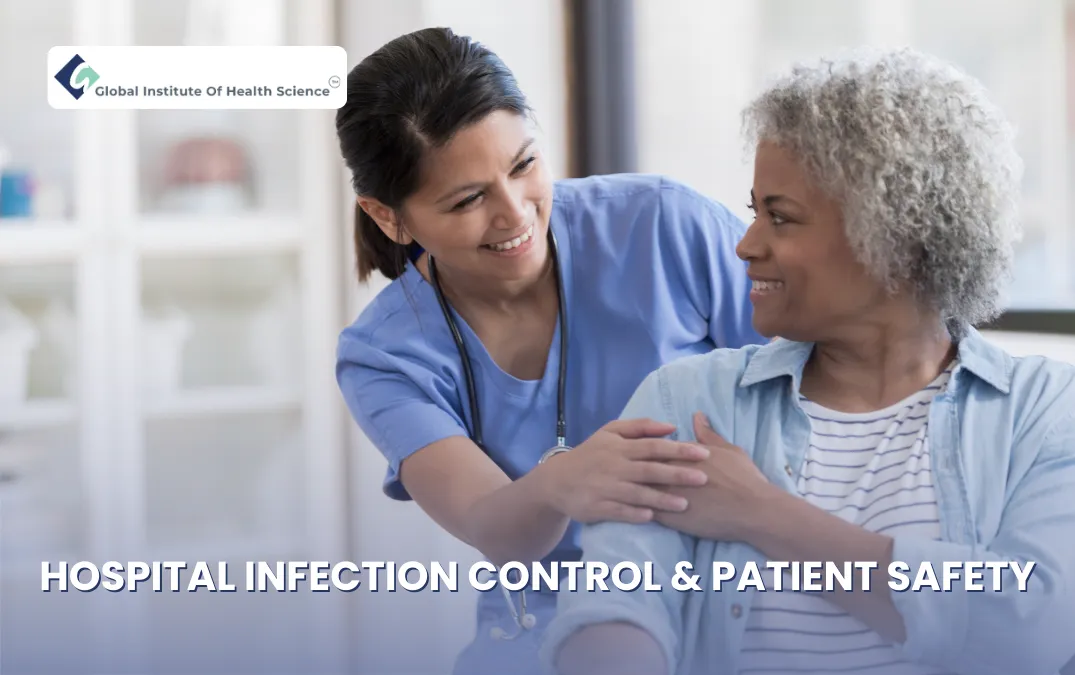
The most effective patient safety course online is one that balances international benchmarks with practical, local applications, allowing for flexible learning without sacrificing depth. Look for curriculum-heavy programs that cover clinical governance, medication safety, and the psychological aspects of “human factors” engineering.
The digital shift in education has been a game-changer for medical professionals. I remember when specialized training meant flying to a different city for a three-day seminar. Now, online platforms allow a nurse in Pune or a surgeon in Delhi to access the same high-level safety modules between shifts.
When evaluating an online program, look for these key elements:
-
Case-Based Learning: Does the course use real-world scenarios?
-
Interactive Audits: Are there tools to help you assess your own workplace?
-
Peer Networking: Can you discuss safety challenges with other professionals?
So what? Choosing a high-quality online course means you can immediately apply global safety standards to your local clinic, improving your professional standing and patient outcomes simultaneously.
What Are the Core Pillars of a Comprehensive Safety Curriculum?
A comprehensive safety curriculum must integrate three specific domains: technical proficiency, systemic communication, and human factors. This combination ensures that the practitioner understands not just what went wrong, but why the environment allowed the error to occur in the first place.
When we look at the data from high-performing hospitals, the difference is rarely the technology—it’s the culture. A solid course will teach you to look at a hospital as a complex machine.
Comparison of General Medical Training vs. Specialized Safety Training
|
Feature |
General Medical Training |
Specialized Patient Safety Course |
|
Primary Focus |
Diagnosis and treatment |
Error prevention and system design |
|
Approach |
Individual clinical skill |
Team-based communication |
|
Outcome |
Patient recovery |
Risk mitigation and protocol building |
|
Evaluation |
Clinical exams |
Root-cause analysis and audits |
So what? Understanding these pillars allows you to stop treating safety as an “extra task” and start seeing it as the foundation of every medical intervention you perform.
Can Specialized Training Actually Reduce Medical Errors?
Specialized safety training reduces medical errors by implementing “forcing functions” and standardized checklists that catch mistakes before they reach the patient. By educating staff on the science of human error, these courses turn a chaotic environment into a predictable, safe space for both staff and patients.
It’s a common myth that more experience automatically leads to fewer mistakes. In reality, the more “routine” a task becomes, the more likely we are to go on autopilot. I’ve spoken with veteran clinicians who admitted that it wasn’t a lack of skill, but a simple lapse in a standard operating procedure that led to a near-miss.
Training forces us to slow down where it matters. It teaches us the “Two-Challenge Rule”—the ability for a junior staff member to respectfully challenge a senior if they spot a safety risk. This democratization of safety is where the real progress happens.
So what? Reducing errors isn’t just about saving lives; it’s about protecting your professional reputation and building a workplace where you feel confident and secure.
What Impact Does Safety Certification Have on Career Growth in 2026?
Safety certification acts as a powerful differentiator in the 2026 job market, signaling to top-tier hospitals and international healthcare groups that you possess specialized administrative and clinical oversight skills. As healthcare shifts toward value-based care, professionals who can prove they reduce risk are in the highest demand.
The healthcare landscape in India is maturing rapidly. Accreditation bodies like NABH and JCI are no longer “optional” badges for hospitals; they are the standard. Hospitals are now actively seeking Safety Officers and Quality Managers who can lead these initiatives.
If you are looking to move into a leadership or administrative role, a certification in patient safety is often the missing link. It shows you understand the “big picture” of healthcare management beyond the stethoscope.
So what? Investing in this training today positions you as a future-ready leader in an increasingly competitive and quality-conscious healthcare industry.
Frequently Asked Questions
1. Is an online patient safety course as valid as an in-person one?
Yes, provided the program is accredited. Modern online platforms use interactive simulations and peer-reviewed assessments that often provide a more comprehensive data-driven experience than traditional lectures.
2. Who is eligible to take a patient safety course in India?
These courses are designed for a wide range of professionals, including doctors, nurses, hospital administrators, pharmacists, and even final-year medical students looking to bolster their resumes.
3. How long does it typically take to complete the certification?
Most online programs are self-paced, usually ranging from 4 to 12 weeks depending on the depth of the modules and the time you can dedicate weekly.
4. Does this training help with NABH accreditation for my hospital?
Absolutely. Having staff trained in formal patient safety protocols is a core requirement for many national and international accreditation standards.
5. What is the most important skill learned in these courses?
While many skills are taught, “Root Cause Analysis” (RCA) is often cited as the most transformative, as it allows professionals to find the source of a problem rather than just treating the symptom.
Take the Next Step in Your Medical Career
The standard of care is shifting, and the expectation for safety has never been higher. Whether you are looking to improve your daily practice or aiming for a leadership role, specialized training is the key.
Are you ready to lead the change in healthcare quality? Explore our latest modules at gihsonline and join a community of safety-first professionals today.