
Roof leaks in Singapore are often more complicated than the stain that eventually appears on a ceiling.
Water may enter through an ageing waterproofing membrane, a crack in a reinforced-concrete roof, deteriorated flashing around a metal roof, failed sealant at a joint or a drainage problem that allows water to remain on a flat roof for too long. By the time moisture becomes visible indoors, the point where the water entered may be some distance away.
That is why good roof waterproofing starts with finding the source rather than simply coating the area above the stain.
Singapore’s climate makes this especially important. The Meteorological Service Singapore describes the country as warm and humid throughout the year, with abundant rainfall and two monsoon seasons. Long-term data for 1991–2020 records an average annual rainfall of more than 2,100 mm.
Roofs therefore need to cope with regular rain, strong solar heating, repeated wetting and drying, and movement caused by changes in temperature.
The Building and Construction Authority’s guidance for reinforced-concrete flat roofs also explains that concrete contains interconnected pores and capillary paths through which water can penetrate. Cracks and voids may additionally form because concrete is relatively weak in tension and is affected by shrinkage, expansion and contraction. BCA therefore recommends waterproofing to keep exposed concrete roofs watertight.
For homeowners, MCSTs, facilities managers and commercial property owners, the practical challenge is choosing the right repair for the actual failure rather than applying another temporary coating.
Roof Leaks Rarely Start Where the Stain Appears
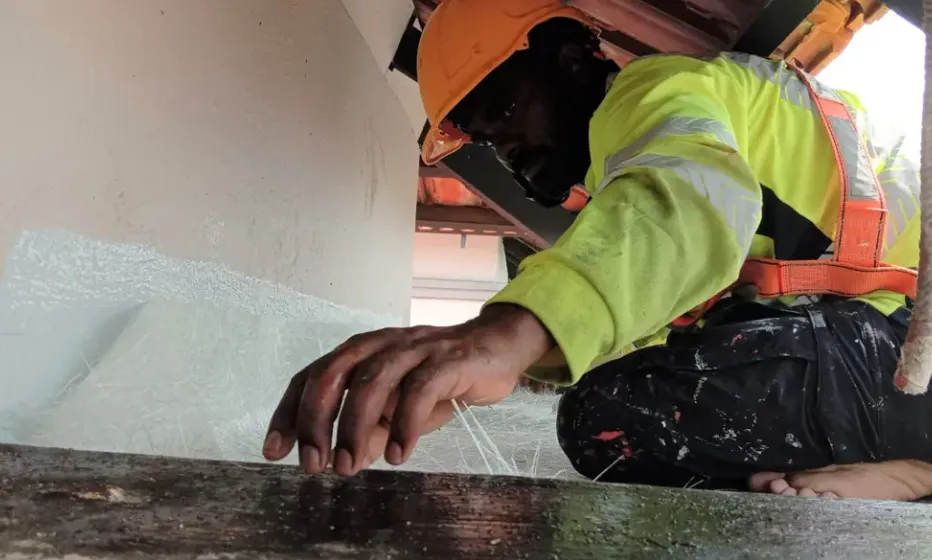
One of the biggest mistakes in waterproofing work is assuming that the visible damp patch marks the exact point where rain entered the building.
Water can travel.
It may run along a slab, follow a joint, migrate beneath an existing membrane or enter beside a roof penetration before appearing somewhere else indoors.
A ceiling stain therefore tells you that moisture is present, but not necessarily where the waterproofing system failed.
This is why diagnosis should come before the choice of membrane.
A useful roof inspection should consider:
-
the condition of the existing waterproofing system;
-
cracks, joints and penetrations;
-
flashings and sealants;
-
gutters and drainage outlets;
-
signs of ponding;
-
roof edges and parapet details;
-
corrosion or damaged fixings on metal roofs;
-
cracked or displaced tiles on pitched roofs; and
-
whether water could actually be entering through an adjacent wall or another building element.
Applying a coating directly above the visible stain can appear to solve the problem temporarily while leaving the real defect untouched.
Why Flat Concrete Roofs Need Proper Waterproofing and Drainage
Reinforced concrete is widely used for flat roofs in Singapore, but the slab alone should not be treated as a complete waterproofing system.
BCA’s good-practice guidance notes that concrete contains pores and capillary tracts through which water may penetrate. It can also develop cracks and voids as a result of thermal movement, shrinkage and other stresses.
A roof waterproofing in the Singapore system adds a protective barrier above the structural substrate.
But the membrane is only part of the design.
Ponding Water Is a Warning Sign
BCA specifically highlights the importance of proper falls on flat roofs. The roof should direct rainwater towards suitable discharge points so that surface water clears as efficiently as possible rather than remaining as ponding or stagnant water.
If water repeatedly collects in the same low area, simply applying a new membrane may not address the underlying drainage defect.
A contractor should therefore consider whether the roof has:
-
adequate falls;
-
blocked outlets;
-
deteriorated drainage details;
-
depressions in the substrate; or
-
alterations that have disrupted the original drainage path.
Waterproofing and drainage work together. A durable membrane can still be placed under unnecessary stress if water is allowed to sit on the surface repeatedly.
Common Causes of Roof Leakage in Singapore
Not every roof leak is caused by a failed membrane.
The likely failure point changes with roof construction, age and previous repair history.
Ageing or Damaged Waterproofing Membranes
Existing roof membranes can deteriorate over time through weather exposure, movement, poor adhesion, physical damage or defects at joints and details.
Visible symptoms may include blistering, cracking, lifted edges, open laps or areas where the coating has become brittle.
A localised defect does not automatically mean the entire roof needs replacement.
The contractor should first determine whether the existing waterproofing remains sound enough for local repair or recoating, or whether widespread deterioration justifies replacement.
Cracks in Reinforced Concrete
Cracks may create pathways for water, but the crack itself needs to be understood before it is sealed.
Some cracks are relatively stable. Others may reflect ongoing movement.
Simply filling a moving crack without addressing the reason for movement can result in the repair opening again.
Where cracking appears significant or structural concerns are suspected, waterproofing work may need to be coordinated with concrete repair or engineering advice rather than treated as a surface issue alone.
BCA’s current good-practice guidance advises building owners to seek specialist or professional advice where waterproofing failure is associated with serious concrete deterioration or structural defects.
Failed Joints, Flashings and Sealants
Roof penetrations and changes in material are common weak points.
Examples include pipe penetrations, parapet joints, metal flashings, expansion joints, skylight details and the interfaces between roofing materials.
These areas experience movement and can be difficult to waterproof if detailing is poor.
A roof may therefore have a generally sound membrane while leaking at one junction.
Metal-Roof Seams and Fasteners
Metal roofs have their own failure patterns.
Water may enter around ageing fasteners, deteriorated sealants, laps, flashings or corroded sections.
In these cases, a full liquid membrane across the entire roof may not always be the first or only answer.
Targeted repair can involve renewing sealants, treating corrosion, repairing damaged sheets and correcting flashing or drainage problems.
Allstar Waterproofing & Services, for example, currently lists metal-roof work alongside tiled and flat-concrete roof waterproofing, with repairs selected according to roof condition rather than presenting one coating as suitable for every roof.
That is the more useful principle for any property owner: the repair method should follow the roof type.
Damaged Tiles, Ridges and Valleys
On tiled roofs, leakage can develop where individual tiles crack or move, or around ridges, valleys and flashing details.
Water can travel beneath the tiles before entering the building, so the obvious interior stain may still be some distance from the external defect.
Safe access can also become a major part of the project on steep or elevated roofs.
Liquid-Applied Waterproofing Membranes
Liquid-applied membranes are widely used on suitable roofs because they cure into a continuous waterproofing layer without the sheet joints found in prefabricated systems.
Common formulations in Singapore include polyurethane, acrylic and hybrid systems.
Allstar’s current roof-waterproofing information, for example, lists single-component acrylic, polyurethane and hybrid liquid-applied membranes among the systems it uses for flat-roof applications.
The main advantage is detailing flexibility.
A liquid membrane can be useful around complex shapes, upstands and penetrations where a seamless coating is valuable.
However, its performance depends heavily on preparation.
The substrate may need to be cleaned, dried and repaired before application. Cracks and unstable surfaces should not simply be hidden beneath a new layer.
Manufacturer requirements for primer, thickness, curing and reinforcement also matter.
For this reason, statements such as “PU waterproofing lasts 20 years” or “liquid waterproofing takes one day” are too broad unless tied to a specific tested system and site conditions.
Different products have different specifications.
Torch-Applied Bituminous Membranes
Torch-applied membranes use prefabricated modified bituminous sheets that are bonded to a prepared roof substrate.
They are commonly associated with suitable reinforced-concrete flat-roof applications.
Allstar’s published roof service describes its torch-applied system as an APP-modified bituminous sheet membrane intended to create a barrier against moisture.
One advantage of sheet systems is that membrane thickness is manufactured rather than created entirely during on-site application.
However, installation quality remains important.
Laps, edges, penetrations and upstands need appropriate detailing. Existing membranes and the substrate also need to be assessed before new layers are installed.
Torch application additionally involves heat and should be carried out with appropriate safety controls.
The original article’s specific claim of “150% elongation” should therefore be removed unless it refers to a named membrane product supported by a current technical data sheet.
When Recoating May Be Enough
Not every leaking roof needs to be stripped down and fully re-waterproofed.
Where the existing substrate and waterproofing remain broadly sound, a contractor may recommend localised repair and protective recoating.
This can make sense where deterioration is limited and the new system is compatible with the existing surface.
However, coating over widespread blistering, poor adhesion, active movement or unresolved ponding can simply conceal the defect.
The condition below the new layer matters more than how fresh the finished coating looks.
Before agreeing to recoating, ask:
-
Is the existing membrane still bonded properly?
-
Are the cracks stable?
-
Is trapped moisture present?
-
Are drainage falls adequate?
-
Is the proposed coating compatible with what is already installed?
-
Which preparation work is included?
Those questions are more useful than choosing a system solely by price per square metre.
PU Injection Has a Different Role
Polyurethane injection is often mentioned alongside waterproofing, but it should not automatically be treated as a substitute for a roof membrane.
Injection techniques can be used to address suitable cracks, joints or leakage pathways in concrete.
The material is introduced into the affected area rather than rolled across an entire roof as a continuous exposed waterproofing system.
Whether injection is appropriate depends on the crack, construction and route of water penetration.
A contractor recommending injection should therefore be able to explain what void or pathway is being treated and why injection is preferable to surface membrane repair, concrete repair or another method.
Roof Waterproofing Versus Roof Repair
These terms overlap, but they are not identical.
Waterproofing focuses on preventing water from penetrating the roof assembly.
Roof repair may involve correcting the physical defect that allowed the leak to develop.
For example, a metal roof with a damaged flashing may need flashing repair before any protective coating is considered.
A tiled roof may require replacement of cracked tiles.
A flat concrete roof with widespread membrane failure may need a new waterproofing system.
A roof with serious concrete deterioration may need repair to the substrate itself.
Good diagnosis prevents waterproofing from being used as a generic answer to every roofing problem.
External Wall Seepage Can Be Mistaken for a Roof Leak
A damp patch close to the ceiling is not always caused by the roof.
Wind-driven rain can enter through façade cracks, defective joints, ageing sealants or other wall defects before travelling internally.
This is particularly relevant during Singapore’s heavy thunderstorms and monsoon rain, where rain can reach surfaces that remain relatively dry during lighter showers.
The repair method for an external-wall defect may differ significantly from a roof membrane repair.
On taller buildings, access can also require specialised work-at-height methods.
Before waterproofing the roof, the contractor should therefore consider whether the leak pattern is actually consistent with roof ingress.
HDB Ceiling Leaks Are Not Always Roof Waterproofing Problems
This distinction matters for HDB residents.
HDB states that a ceiling leak between two flats commonly occurs when water from the upper flat passes through the concrete floor slab, often because of deterioration of the waterproof membrane and screed in wet areas such as toilets or bathrooms.
That is an inter-floor seepage problem, not a roof leak.
Where repairs to the floor or ceiling slab are needed, HDB states that the upper and lower flat owners generally arrange the work and share the repair costs.
The situation is different for top-floor flats.
If leakage comes from the roof of an HDB block, that roof forms part of the common property maintained by the Town Council, and the resident should contact the Town Council for rectification.
This is more accurate than telling every HDB owner with a ceiling leak to appoint a private roof-waterproofing contractor.
How Much Does Roof Waterproofing Cost in Singapore?
There is no defensible single price range that covers every roof-waterproofing project in Singapore.
The original S$2,000–S$15,000 range is too broad to be useful without a multi-provider market source, and it risks presenting one estimate as an industry standard.
Actual cost depends on factors such as:
-
roof area;
-
roof type;
-
accessibility and working height;
-
condition of the existing membrane;
-
preparation and hacking requirements;
-
cracks or concrete repair;
-
number of drainage details and penetrations;
-
selected waterproofing system;
-
scaffolding, boom-lift or rope-access requirements;
-
protection layers or reinstatement work; and
-
warranty scope.
A small local repair can be completely different in scope from replacing the waterproofing across a large commercial flat roof.
The more useful approach is to obtain a site-specific quotation that separates preparation, repair, membrane installation and other required works.
When comparing quotations, make sure the contractors are pricing broadly equivalent scopes.
A quotation that appears cheaper may exclude removal of failed material, drainage correction or reinstatement that another contractor has included.
Waterproofing Quotes: Questions Worth Asking
Price is only one part of a waterproofing proposal.
A useful quotation should make it reasonably clear what problem the contractor believes exists and how the proposed work addresses it.
Ask the contractor to identify:
What Is the Suspected Source of the Leak?
A recommendation is easier to evaluate when the diagnosis is explicit.
“Apply waterproofing coating” is less useful than explaining that the existing membrane has failed around several roof penetrations and that the substrate needs local repair before recoating.
What Surface Preparation Is Included?
Preparation can influence waterproofing performance as much as the membrane itself.
Ask whether the work includes cleaning, removal of loose material, repair of cracks, primer or other substrate preparation required by the proposed system.
Is the Entire Roof Being Treated?
Clarify whether the contractor is quoting for one defect, a selected area or the entire roof.
This becomes especially important when comparing two proposals with very different prices.
How Will Drainage Problems Be Handled?
If ponding is present, ask whether the contractor has identified why it occurs and whether the proposed scope changes the falls or drainage arrangements.
What Warranty Applies?
Warranty terms should be read rather than judged only by duration.
Check what work is covered, which exclusions apply and what conditions need to be maintained for the warranty to remain valid.
Contractor Credentials: What Actually Matters?
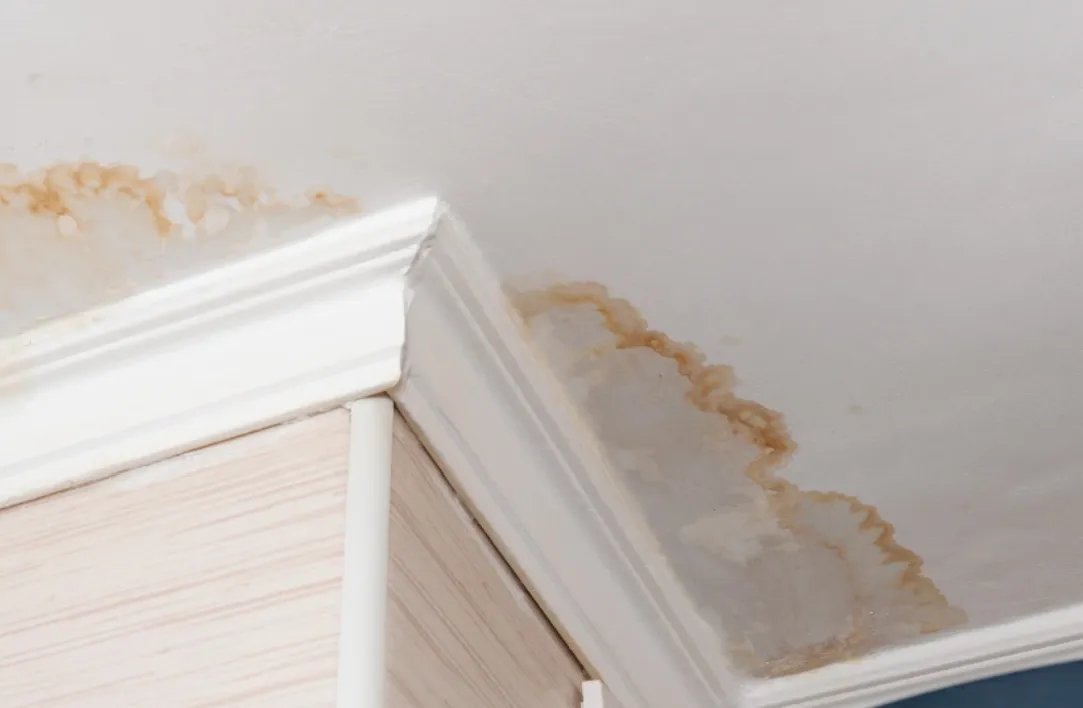
The original article suggests that every waterproofing project should automatically go to a “BCA-registered contractor.”
The position is more nuanced.
BCA operates the Contractors Registration System and other licensing frameworks for specific purposes, including public-sector work and particular building activities. BCA’s public e-Directory allows buyers to check registered firms, workheads, grades and builder licences where these are relevant.
For waterproofing work, buyers should first understand whether a particular registration or licence is required for their project rather than assuming that one badge guarantees workmanship.
Useful checks can include:
-
relevant BCA registration or builder licensing where applicable;
-
current bizSAFE status where workplace-safety credentials matter;
-
appropriate work-at-height competence where rope access is required;
-
experience with the roof type and proposed system;
-
evidence of similar completed projects;
-
written warranty conditions; and
-
insurance, safety arrangements and method statements where relevant to the project.
BCA provides a current e-Directory for verifying construction-firm registrations, while the Workplace Safety and Health Council provides a bizSAFE self-help service where a company’s current level and certificate expiry can be checked.
This is better than relying on logos copied onto a contractor’s website.
A Contractor Example: Separating Company Claims From Independent Requirements
Guest-post articles can mention a service provider without presenting its own claims as universal industry facts.
For instance, Allstar Waterproofing & Services currently states that it has more than 20 years of combined industry experience and has serviced more than 3,000 residential, commercial and industrial properties. It also publishes a one-year warranty for repair work, with extended warranty options available for discussion, and advertises on-site inspections and no-obligation quotations.
Those are company-published claims and service terms, not Singapore-wide standards.
A property owner comparing Allstar with another contractor should still confirm that the same terms apply to the specific roof project being quoted.
That distinction keeps a guest article useful without turning it into an endorsement.
Waterproofing During Singapore’s Rainy Weather
Many membrane and coating systems require suitable surface conditions for preparation, adhesion and curing.
That makes weather planning an important part of roof work.
Singapore does not have a completely dry season. Rain occurs throughout the year, although the wet phase of the Northeast Monsoon from roughly November to January is generally wetter.
Contractors therefore need to plan applications around actual site and weather conditions rather than waiting for an imaginary rain-free season.
Depending on the product, the surface may need to be sufficiently dry before primer or membrane application. Rain during curing can also affect some systems.
The correct conditions should come from the membrane manufacturer’s technical instructions.
This is more accurate than stating that waterproofing simply “cannot be done during rainy season.”
How Long Does Roof Waterproofing Last?
There is no single service life that applies to every waterproofing system.
Durability depends on:
-
membrane chemistry and specification;
-
substrate preparation;
-
installation quality;
-
UV and weather exposure;
-
roof movement;
-
foot traffic;
-
drainage;
-
protection layers;
-
maintenance; and
-
whether defects elsewhere in the roof are corrected.
Product manufacturers may provide expected service life or warranty information for specific systems, but broad claims such as “PU membranes last more than 20 years” should not be presented without identifying the exact product and conditions.
Similarly, warranty length is not the same as expected service life.
A membrane can potentially remain serviceable beyond its contractor warranty, while poor preparation can also lead to premature failure regardless of the theoretical durability of the material.
Warning Signs That a Roof Needs Inspection
A leak does not always appear as water dripping directly from the ceiling.
Earlier signs can include recurring stains, bubbling paint, damp patches, musty areas, cracked roof coatings, visible membrane lifting, damaged sealant or persistent ponding.
Exterior inspection may reveal:
-
open joints;
-
cracked tiles;
-
deteriorated flashing;
-
corrosion;
-
damaged roof sheets;
-
cracks around penetrations; or
-
blocked outlets.
None of these symptoms automatically proves that a complete new waterproofing system is required.
They are signals that the roof should be assessed before the damage spreads further.
Repair, Recoat or Replace the Waterproofing System?
The correct scope depends on how widespread the failure is.
Local Repair
A local repair may be appropriate where the defect is isolated and the surrounding waterproofing remains serviceable.
Examples could include a failed joint, damaged flashing or local membrane defect.
Recoating
Recoating may be suitable when the existing waterproofing remains sufficiently stable and compatible with a new protective system.
Proper preparation remains essential.
Membrane Replacement
Replacement may become more appropriate where deterioration is widespread, adhesion has failed across large areas or repeated repairs have not resolved the problem.
Roof Replacement
Replacing the entire roof structure or roofing material is a much larger decision and should not be confused with replacing a waterproofing membrane.
Metal sheets or tiles may warrant replacement when deterioration is extensive, while a sound roof structure may only require repairs to selected components.
A contractor should explain why the proposed level of intervention is proportionate to the condition found.
The Importance of Leak Tracing Before Waterproofing
Repeated patch repairs are often a sign that the source has not been identified confidently.
A systematic investigation can include visual inspection, tracing moisture patterns and, depending on the problem, appropriate testing or diagnostic techniques.
The aim is not to use technology for its own sake.
It is to build a plausible path from the external defect to the internal symptom.
If the diagnosis changes during investigation, the proposed repair should change with it.
That is a stronger sign of professional judgement than insisting on the same solution before the roof has been inspected.
Maintenance After Roof Waterproofing
Waterproofing should not be treated as invisible once the project is completed.
Periodic inspection can help identify defects before they become major leaks.
Property managers should pay particular attention to:
-
outlets and gutters;
-
ponding;
-
damage caused by maintenance work;
-
deterioration around penetrations;
-
sealant condition;
-
membrane edges and joints; and
-
new cracks or movement.
Roof-mounted equipment can also create problems if later contractors drill through or damage the waterproofing without restoring it correctly.
Keeping records of the membrane system and previous repairs makes later maintenance easier.
Frequently Asked Questions
Does Every Concrete Roof in Singapore Need Waterproofing?
Exposed reinforced-concrete flat roofs generally require a waterproofing system to remain watertight. BCA notes that reinforced concrete contains pores and capillary paths and may develop cracks through shrinkage and thermal movement, allowing water penetration if the roof is not properly protected.
Is Torch-On Membrane Better Than PU Waterproofing?
Neither is universally better. Torch-applied bituminous sheets and liquid-applied systems have different installation requirements and detailing advantages. The choice should depend on the substrate, existing roof condition, movement, geometry, access and manufacturer’s specifications.
Can Roof Waterproofing Be Done Without Hacking?
Sometimes. Local repair or recoating may be possible where the existing substrate and waterproofing remain sound enough. Where failed material, trapped moisture or major substrate deterioration exists, removal and repair may be necessary before a new system can perform properly.
How Do I Know Whether a Ceiling Leak Is Coming From the Roof?
The location of the stain alone is not enough. Water can travel along slabs, walls and joints. The roof, façade, plumbing and wet areas may all need to be considered depending on the property and leak pattern. Top-floor HDB roof leaks should also be reported to the Town Council because the block roof is common property.
Who Pays for an HDB Toilet Ceiling Leak Between Flats?
HDB states that when an inter-floor ceiling leak requires repair to the floor or ceiling slab, the upper and lower flat owners generally arrange the repair together and split the cost. This differs from top-floor leakage originating from the block roof, which is maintained by the Town Council.
Can Waterproofing Stop External-Wall Seepage?
A roof membrane will not solve a façade defect. If rainwater is entering through wall cracks, joints or failed sealants, the external wall needs to be diagnosed and repaired separately. Leak tracing should establish the likely source before work begins.
How Long Should Roof Waterproofing Last?
There is no universal figure. Service life depends on the specific system, installation, substrate, weather exposure, drainage, movement and maintenance. Ask for the technical data and warranty terms of the exact membrane being proposed rather than relying on a generic lifespan claim.
Should I Choose the Contractor With the Longest Warranty?
Not automatically. Compare what the warranty covers, its exclusions, maintenance conditions and the contractor’s proposed preparation and repair scope. A long warranty does not compensate for incorrect diagnosis or poor installation.
Conclusion
Roof waterproofing in Singapore works best when the project begins with the leak rather than the product.
A recurring ceiling stain does not automatically mean that the entire roof needs a new membrane. The real problem may be an isolated joint, ponding water, damaged flashing, failed roof material, external-wall seepage or, in an HDB flat, an inter-floor wet-area leak.
Once the source is understood, the contractor can decide whether local repair, recoating, membrane replacement or wider roof work is justified.
Singapore’s heavy rainfall and tropical humidity make good waterproofing important, while BCA guidance reinforces two fundamentals for reinforced-concrete flat roofs: the roof needs an effective waterproof barrier, and rainwater needs a proper drainage path to minimise ponding.
For property owners who prefer professional assessment, Allstar Waterproofing & Services is one Singapore contractor currently offering roof waterproofing, roof-leak repair and related water-seepage services. As with any provider, buyers should confirm the diagnosis, proposed system, preparation scope, current credentials, warranty conditions and project-specific quotation before proceeding.
The most dependable waterproofing decision is not the one with the biggest promise. It is the one where the repair method clearly matches the source of the water.