
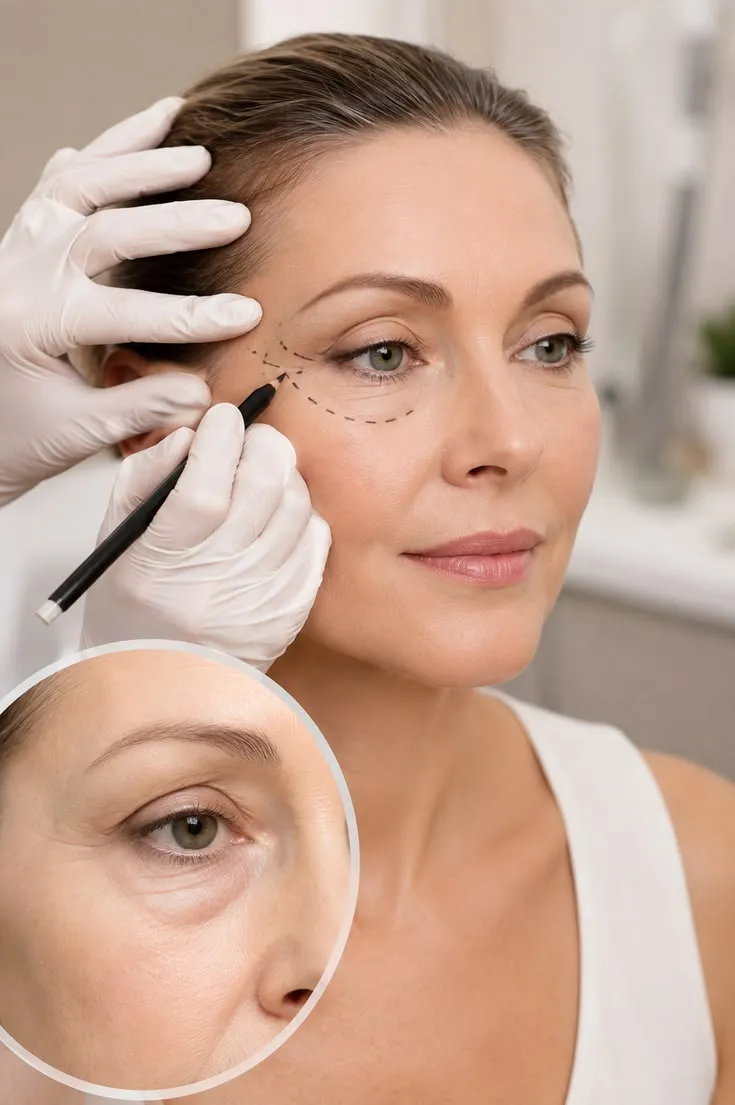
Ageing around the eyes and forehead can create a tired or heavy appearance, but the visible change may come from different structures. Loose upper-eyelid skin, brow descent and dynamic forehead lines are not the same problem, which means they should not automatically receive the same treatment.
For patients considering blepharoplasty Malaysia, the first step is identifying whether excess eyelid skin is truly the main concern. A person whose appearance is influenced mostly by muscle-related forehead lines may need a different discussion. Choosing treatment according to anatomy is more useful than deciding between surgery and injections based only on convenience.
What Blepharoplasty Is Designed to Address
Blepharoplasty is surgery performed on the upper eyelids, lower eyelids or both. Upper-eyelid surgery can remove selected excess skin and, where appropriate, address fat that contributes to heaviness or puffiness.
The American Society of Plastic Surgeons notes that a drooping-looking upper lid may also result from brow descent or true eyelid ptosis rather than excess skin alone. These conditions can require different treatment. This is why a careful examination is important before any tissue is removed.
Heavy Eyelids Can Have More Than One Cause
A patient may describe the upper eye area as “hooded” or “tired”, but several anatomical factors can produce that appearance.
Excess skin can fold over the natural crease. The eyebrow may sit lower than it did previously, adding weight to the upper eyelid. In other patients, the eyelid itself may droop because of weakness or stretching of the muscle that lifts it.
Removing skin without identifying the real cause may fail to address the concern fully. The assessment should therefore include brow position, eyelid movement, eye health and the amount of skin present.
Where Botulinum Toxin Fits
Someone researching botox Subang Jaya may be more concerned about dynamic expression lines than eyelid skin. Botox is a brand name for one botulinum toxin product, while botulinum toxin is the medically precise general term.
Botulinum toxin temporarily reduces activity in selected muscles. It is commonly used for expression-related concerns such as frown lines, forehead creases and crow’s feet. It does not remove excess eyelid skin, repair eyelid ptosis or replace surgery when a structural problem is present.
Brow Position Requires Careful Planning
The forehead and brow influence how open the upper eye area appears. Treating forehead muscles without considering brow position can change that balance.
Because botulinum toxin weakens selected muscles temporarily, injection location and dose matter. In a patient who already has a low brow or heavy upper eyelids, treatment planning requires particular care.
This is one reason injectable treatment should be based on facial anatomy rather than a fixed number of units copied from another person.
Surgery and Injections Have Different Timelines
Blepharoplasty involves incisions, healing and a recovery period. Swelling and bruising can occur, and scars gradually mature with time.
Botulinum toxin does not involve surgical incisions and typically requires much less recovery, but its effects are temporary. Muscle activity gradually returns, so repeat treatment may be considered if the patient wants to maintain the change.
The shorter recovery of an injectable does not mean it can solve the same problems as eyelid surgery.
Understand the Different Risks
Blepharoplasty carries potential risks including bleeding, infection, dry eyes, changes in eyelid position, difficulty closing the eyes, scarring and, rarely, visual complications.
Botulinum toxin has a different risk profile. Temporary bruising, headache, facial weakness or drooping can occur. Professional guidance also recognises the rare possibility of toxin effects spreading beyond the treatment area and causing more serious symptoms.
Both treatments therefore require appropriate medical assessment, even though one is surgical and the other is minimally invasive.
Ask What Is Actually Causing the Concern
A useful consultation should answer several questions:
- Is excess skin present?
- Is the brow contributing to the heaviness?
- Is true eyelid ptosis present?
- Does facial movement mainly cause the visible lines?
- Would surgery, botulinum toxin or another approach address the problem?
These questions help separate a structural eyelid issue from an expression-line concern.
Conclusion
Blepharoplasty and botulinum toxin can both affect the upper face, but they treat different anatomical problems. Eyelid surgery can address selected excess skin and fat, while botulinum toxin temporarily reduces activity in targeted facial muscles.
The right choice depends on whether the concern comes from eyelid tissue, brow position, muscle movement or a combination of factors. A qualified medical assessment can clarify the cause and help patients choose a proportionate treatment rather than expecting one procedure to correct every sign of ageing around the eyes and forehead.