
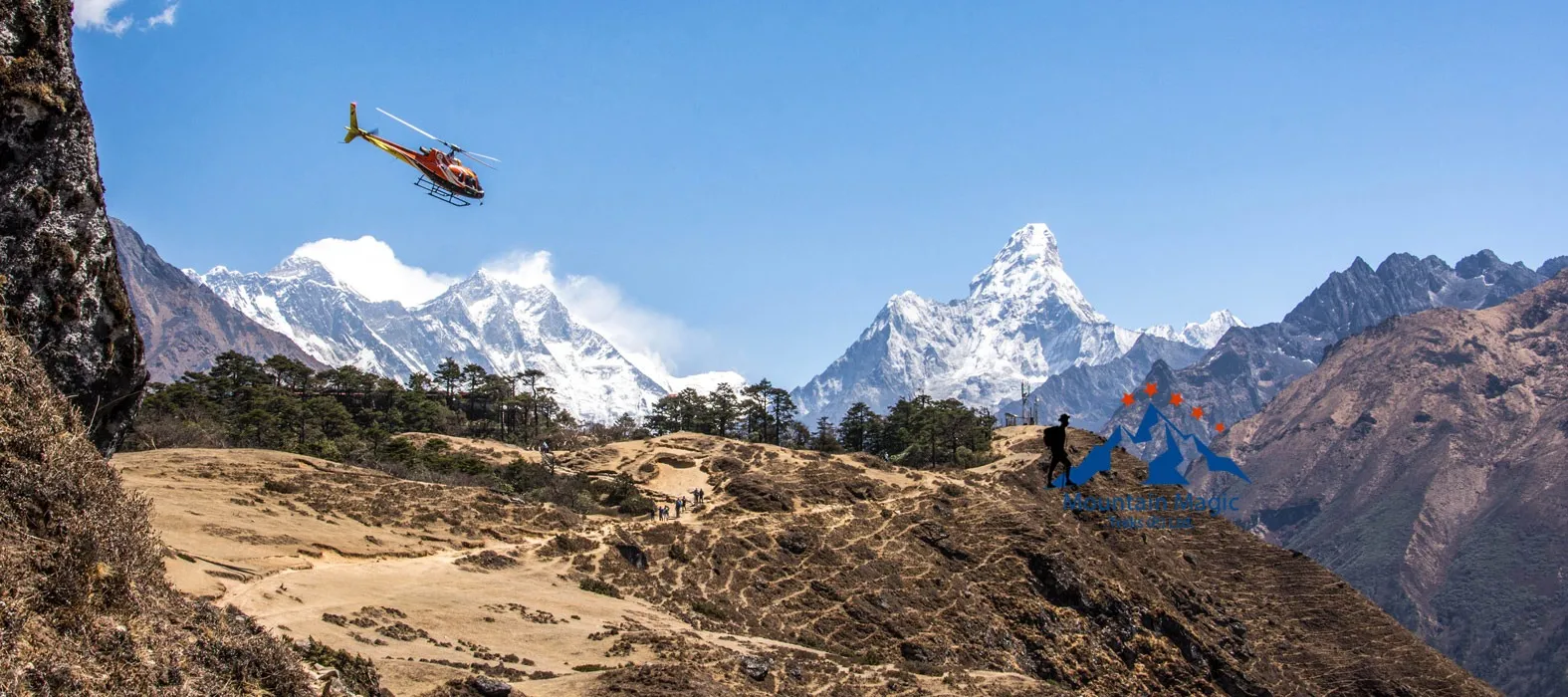
An Everest trek can teach you something that busy city life often makes easy to forget: not everything can be rushed.
You cannot hurry your body into adapting to high altitude. You cannot make a mountain trail flat. You cannot tell clouds to move away. And you cannot make a helicopter fly when weather conditions are unsafe.
The Everest Base Camp Trek With Helicopter Return is therefore more than a physical journey. It teaches you to slow down, pay attention, and work with the conditions around you.
The Mountain Sets the Pace
At home, you may measure your day by minutes.
You rush to work, finish tasks, answer messages, and move from one place to another.
The mountain changes that habit.
A short trail section may take longer than expected. A steep climb may require several breaks. A beautiful view may make you stop without planning to.
There is no prize for finishing every section early.
Slow Walking Can Be Smart Walking
At high altitude, speed is not always your friend.
A steady pace helps you manage your energy. It also gives you time to notice how your body feels.
You may find that walking slowly allows you to breathe more comfortably and enjoy the trail instead of constantly thinking about the next stop.
That becomes especially important as the route climbs higher.
Your Body Needs Time
One of the hardest things for an active person to accept is that fitness does not remove every altitude problem.
You can be strong and still need time to adjust.
The itinerary includes acclimatization stops in places such as Namche Bazaar and Dingboche. These pauses are important because your body needs time to respond to the changing elevation.
Instead of seeing them as breaks from the adventure, think of them as part of the adventure.
Learn to Listen Before You Struggle
Small signs should not be ignored.
Headache, unusual tiredness, dizziness, or feeling unwell at altitude deserves attention.
Tell your guide if something does not feel right.
Trying to hide a problem because you want to stay on schedule is a poor decision.
The mountain will still be there if you need to slow down.
Weather Has the Final Word
You can prepare your clothes.
You can train your legs.
You can plan your route.
But you cannot control Himalayan weather.
A sunny morning can turn cloudy. Wind can increase. Visibility can change.
This matters even more when the return journey includes a helicopter.
The Everest Base Camp Trek With Helicopter Return offers a faster way back, but helicopter operations still depend on safe flying conditions.
Flexibility Is Part of Good Planning
Do not create an itinerary so tight that one delay ruins your entire trip.
Give yourself some extra time around important flights.
If the helicopter cannot operate immediately because of weather, patience may be necessary.
That is not poor planning by itself.
It is part of traveling in a high mountain environment.
The Trail Rewards Observation
When you stop rushing, you start seeing more.
You notice the texture of old stone walls.
You see prayer flags moving above a trail.
You notice how the landscape changes as trees become less common.
You see snow sitting on distant peaks even when the trail beneath your feet is dry.
These details are easy to miss when you are focused only on reaching the next village.
Rest Is Not Wasted Time
Modern life often treats rest as something you earn after finishing your work.
A high-altitude trek teaches a different lesson.
Rest helps you continue.
After a demanding walking day, sitting down with a warm meal can be exactly what your body needs.
A quiet evening at a lodge may not sound exciting when you are planning the trip, but you may appreciate it deeply after several hours on the trail.
Use Acclimatization Days Wisely
An acclimatization day does not necessarily mean staying in bed.
Depending on your guide’s advice, you may take a short walk around the area, explore the village, or visit a nearby viewpoint.
The goal is to give your body time while keeping the day manageable.
There is no need to turn an acclimatization day into another major hike.
The Higher Trail Changes Your Expectations
As you move toward Lobuche and Gorakshep, the surroundings become more rugged.
The landscape feels colder and more exposed.
At this point, you may realize that reaching Everest Base Camp is not about looking impressive.
It is about managing yourself well.
Your pace.
Your clothing.
Your water.
Your food.
Your rest.
Your attitude.
The higher you go, the more these simple choices matter.
Base Camp Is Reached One Step at a Time
People often imagine the moment of reaching Base Camp as the main event.
It is certainly important.
But the destination would mean less without everything that came before it.
Every uphill section contributes.
Every early morning contributes.
Every tired afternoon contributes.
Every time you chose a steady pace instead of rushing contributes.
That is why reaching Everest Base Camp can feel so satisfying.
You did not simply arrive.
You worked your way there.
Kala Patthar Changes the Perspective
For many trekkers, Kala Patthar provides one of the strongest mountain views of the trip.
At around 5,545 meters, it is higher than Everest Base Camp itself.
The climb may be demanding because of the elevation, but the view gives you a chance to understand how far you have traveled.
The mountains appear enormous.
The trail below looks small.
For a few minutes, the effort of the previous days may seem worth every tired step.
Then the Journey Speeds Up
After spending days moving slowly, the helicopter return creates a dramatic contrast.
You have become used to measuring distance in walking hours.
Now the landscape passes beneath you.
The Everest Base Camp Trek With Helicopter Return gives you a chance to experience this change in pace at the end of the trip.
The helicopter does not replace the walking experience.
It adds another perspective to it.
Look Down at the Route You Walked
During the flight, try to recognize parts of the trail.
A village you visited earlier may look tiny from above.
A valley that once seemed huge becomes part of a much larger landscape.
This can be one of the most satisfying parts of the return.
You finally see the route as a whole.
What the Trek Leaves Behind
The lessons from an Everest trek do not have to end when you leave Nepal.
You may return home and remember to slow down before reacting.
You may become more comfortable with plans changing.
You may understand that progress does not always mean moving quickly.
Sometimes progress means continuing at a pace you can sustain.
That may be one of the most useful things the mountains can teach.
FAQs
Is patience really important on an Everest trek?
Yes. High altitude, changing weather, physical effort, and transportation can all require travelers to adjust their plans.
Does being physically fit make altitude easy?
Not necessarily. Fitness helps with the physical demands of trekking, but your body still needs time to adjust to high elevation.
Why are acclimatization days included?
They give your body time to adapt before you continue toward higher elevations.
Can the helicopter return be affected by weather?
Yes. Helicopter operations depend on suitable flying conditions, including visibility and weather.
What makes Kala Patthar special?
It offers a high viewpoint with broad views of Everest and surrounding Himalayan peaks.
Conclusion
The Everest Base Camp Trek With Helicopter Return teaches patience in a very practical way.
You learn that rushing does not always help. Rest has value. Weather cannot be controlled. Your body deserves attention. A changed plan is not automatically a bad plan.
Most importantly, you learn to appreciate progress one step at a time.
The mountains do not care how quickly you finish.
They simply ask you to keep moving wisely.
And sometimes, that is a lesson worth bringing home.