
Quick Facts Summary
| Category | Details |
|---|---|
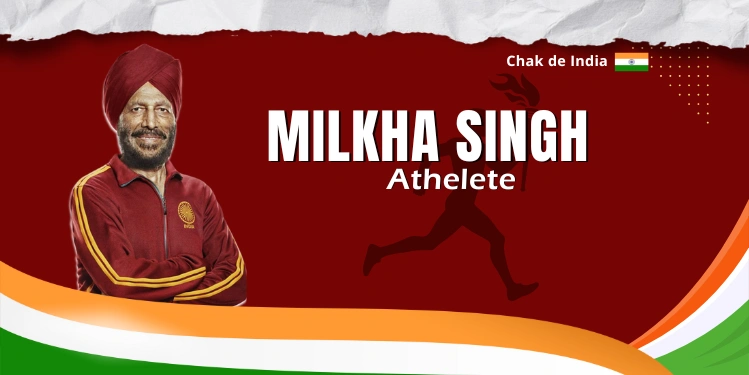
| Full Name | Milkha Singh |
| Nickname | The Flying Sikh |
| Date of Birth | November 20, 1929 |
| Date of Death | June 18, 2021 |
| Age at Death | 91 years |
| Birthplace | Govindpura, Punjab (now in Pakistan) |
| Nationality | Indian |
| Profession | Track and Field Sprinter, Army Officer |
| Famous For | 400m Sprint, Commonwealth Gold 1958, Asian Games Gold |
| Milkha Singh Net Worth | ₹10-15 Crore (at time of death, 2021) |
| Zodiac Sign | Scorpio |
| Religion | Sikhism |
| Caste | Rathore Rajput |
| Height | 5’10” (178 cm) |
| Military Rank | Honorary Captain |
| Awards | Padma Shri (1959) |
Personal Information
| Attribute | Details |
|---|---|
| Full Name | Milkha Singh |
| Popular Nickname | The Flying Sikh |
| Other Names | India’s Golden Boy |
| Date of Birth | November 20, 1929 |
| Place of Birth | Govindpura (near Muzaffargarh), Punjab Province, British India |
| Current Location (Birth) | Kot Addu District, Pakistan |
| Date of Death | June 18, 2021 |
| Place of Death | Chandigarh, India |
| Age at Death | 91 years 6 months |
| Zodiac Sign | Scorpio |
| Nationality | Indian |
| Religion | Sikhism |
| Caste/Community | Rathore Rajput (Sikh) |
| Current Residence (Lifetime) | Chandigarh, India |
| Hometown | Originally from Punjab (Pakistan), settled in Chandigarh |
| Languages Spoken | Punjabi, Hindi, English |
| Citizenship | Indian (from 1947) |
Family & Personal Life
| Family Member | Name/Details |
|---|---|
| Father’s Name | Not Publicly Disclosed |
| Father’s Profession | Farmer |
| Father’s Status | Killed during Partition (1947) |
| Mother’s Name | Not Publicly Disclosed |
| Mother’s Status | Killed during Partition (1947) |
| Total Siblings | 14 siblings (15 children total) |
| Siblings Lost | 8 died before Partition, several killed during Partition |
| Sister | Ishvar (married, helped him post-Partition) |
| Brother | Helped him join Indian Army |
| Family Tragedy | Lost parents, brother, and 2 sisters in Partition violence (1947) |
| Witness to | Mass killings during 1947 Partition |
Marital Status & Children
| Details | Information |
|---|---|
| Marital Status | Married (until death) |
| Wife’s Name | Nirmal Kaur (Nirmal Milkha Singh) |
| Wife’s Profession | Former Captain, Indian Women’s Volleyball Team |
| Marriage Year | 1960s (Exact date not public) |
| Wife’s Death | June 13, 2021 (5 days before Milkha Singh) |
| Wife’s Death Cause | COVID-19 complications |
| Children | 4 children (3 daughters, 1 son) |
| Son’s Name | Jeev Milkha Singh |
| Son’s Profession | Professional Golfer |
| Jeev Milkha Singh Net Worth | ₹200-250 Crore (Professional Golf Career) |
| Daughters | Sonia, Mona, Aleeza (names approximate) |
| Adopted Son | Havildar Bikram Singh (1999 Kargil War martyr) |
| Family Legacy | Sports excellence continues through son |
Milkha Singh Net Worth: Financial Details
Net Worth Overview
| Financial Category | Amount/Details |
|---|---|
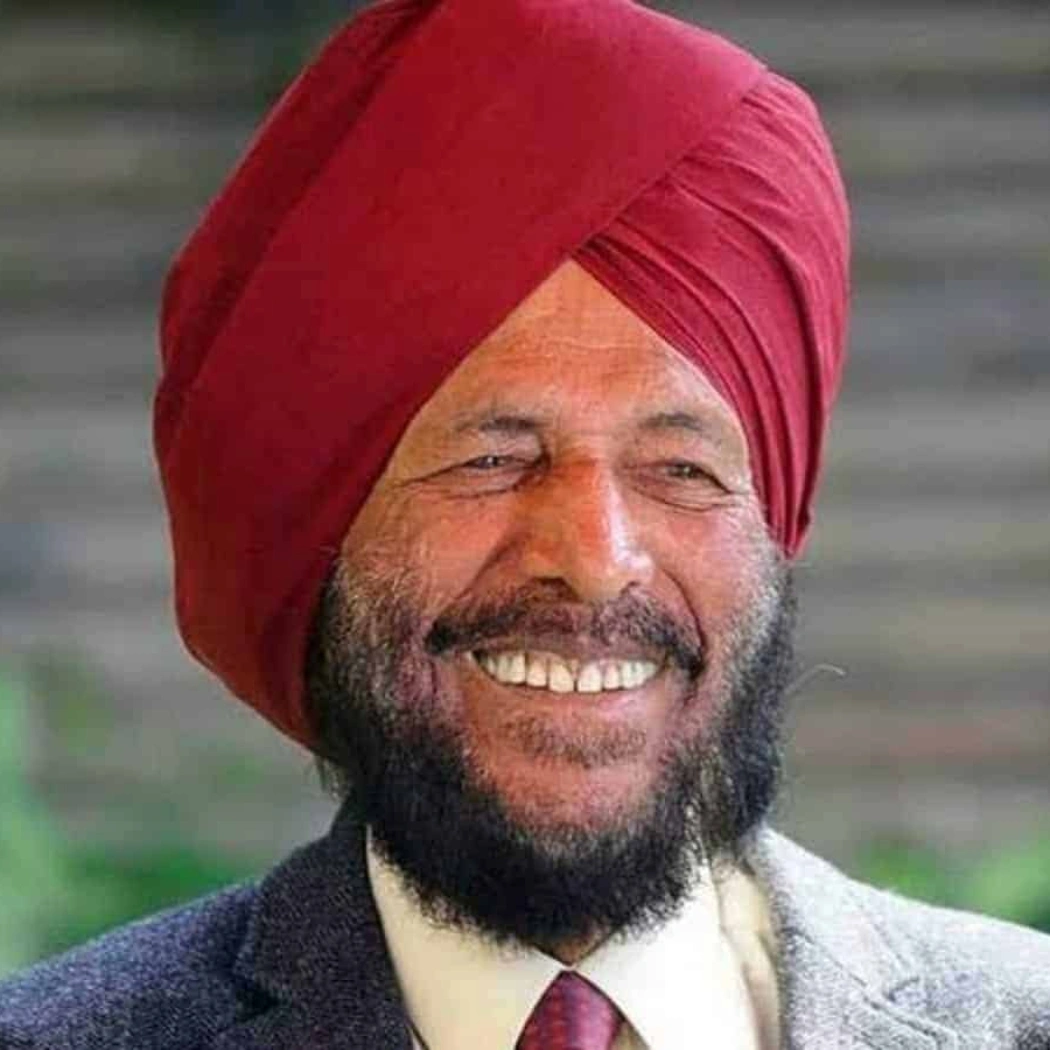
| Milkha Singh Net Worth (2021) | ₹10-15 Crore ($1.2-1.8 Million) |
| Alternative Estimates | ₹42-83 Crore (various sources) |
| Most Reliable Estimate | ₹10-15 Crore |
| Net Worth in Dollars | $1.2-1.8 Million (approximately) |
| Peak Earning Period | 1958-1968 (Athletic Career) |
| Post-Retirement Income | Government Pension + Book Royalties |
| Wealth Status | Upper Middle Class (by modern standards) |
| Financial Philosophy | Simplicity, Charity, Service over Wealth |
| Property Holdings | Residential house in Chandigarh |
| Vehicle Ownership | Modest cars (not luxury focused) |
| Lifestyle | Simple, disciplined, non-ostentatious |
Milkha Singh Net Worth Sources
| Income Source | Contribution to Net Worth | Details |
|---|---|---|
| Indian Army Salary & Pension | 40-50% | Served 1951-1970s, Honorary Captain rank, lifelong pension |
| Government Sports Awards | 15-20% | Prize money from Asian Games, Commonwealth Games |
| Book Royalties | 15-20% | “The Race of My Life” autobiography (2013) |
| Film Rights | Minimal (₹1 only) | Sold “Bhaag Milkha Bhaag” rights for symbolic Re 1 |
| Government Pensions | 10-15% | Director of Sports, Punjab Education Department |
| Public Speaking | 5-10% | Motivational talks, event appearances |
| Brand Endorsements | Minimal | Limited endorsements (pre-commercial era) |
| Investments | Modest | Conservative savings and government bonds |
Financial Milestones
| Year | Financial Event | Impact on Milkha Singh Net Worth |
|---|---|---|
| 1951 | Joined Indian Army | Steady salary began (₹300-500/month) |
| 1958 | Commonwealth Gold Medal | Prize money + national recognition |
| 1959 | Padma Shri Award | Government recognition + pension increase |
| 1960-1964 | Olympic Participations | International exposure + stipends |
| 1970s | Director of Sports, Punjab | Government position salary (₹2,000-5,000/month) |
| 1980s-2000s | Retirement Pension | Steady income stream |
| 2013 | Autobiography Published | Bestseller royalties began |
| 2013 | “Bhaag Milkha Bhaag” Release | Sold rights for Re 1 (donated to charity) |
| 2013-2021 | Post-Film Fame | Speaking fees, appearances increased |
| 2021 | Death | Estate valued at ₹10-15 Crore |
Educational Background
| Education Level | Details |
|---|---|
| Early Education | Disrupted due to Partition |
| Primary Schooling | Govindpura, Punjab (incomplete) |
| Post-Partition | Minimal formal education (lived as refugee) |
| Literacy Status | Self-educated, functionally literate |
| Army Training | Electrical Mechanical Engineering Centre, Secunderabad |
| Athletic Training | Coached by Havaldar Gurdev Singh (Army) |
| Special Education | Sports coaching, military discipline |
| Honorary Degrees | None formally documented |
| Educational Philosophy | Believed in discipline over degrees |
| Self-Learning | Learned through experience, mentorship |
Education Impact: Milkha Singh’s limited formal education never hindered his success. He proved that determination, discipline, and focus can overcome educational barriers. His story inspires millions who face similar challenges.
Physical Statistics
| Physical Attribute | Measurement |
|---|---|
| Height | 5 feet 10 inches (178 cm) |
| Weight (Peak) | 75 kg (165 lbs) |
| Weight (Later Years) | 80-85 kg |
| Chest | 40 inches (expanded during peak) |
| Waist | 32 inches (peak athletic condition) |
| Biceps | 14 inches |
| Eye Color | Dark Brown |
| Hair Color | Black (turned grey/white in old age) |
| Hair Style | Kept short, maintained traditional Sikh turban |
| Body Type | Athletic, Mesomorphic |
| Distinctive Features | Powerful legs, Strong build |
| Fitness Regimen | Running 20-30 km daily (peak years) |
| Diet | High protein, Traditional Punjabi cuisine |
| Athletic Build | Sprint-optimized physique |
Sports Career Timeline
| Year | Event/Achievement | Position/Medal | Location |
|---|---|---|---|
| 1951 | Joined Indian Army | Recruited | India |
| 1951 | Discovered running talent | Army Sports | Secunderabad |
| 1956 | Summer Olympics | Participated (200m, 400m) | Melbourne, Australia |
| 1958 | Asian Games 200m | Gold Medal | Tokyo, Japan |
| 1958 | Asian Games 400m | Gold Medal | Tokyo, Japan |
| 1958 | National Games 200m | Gold + National Record | Cuttack, India |
| 1958 | National Games 400m | Gold + National Record | Cuttack, India |
| 1958 | Commonwealth Games 440 yards | Gold Medal (46.6 sec) | Cardiff, Wales |
| 1960 | Race vs Abdul Khaliq | Won (nicknamed “Flying Sikh”) | Lahore, Pakistan |
| 1960 | AAA Championships 440 yards | Gold Medal | London, UK |
| 1960 | Summer Olympics 400m | 4th Place (45.73 sec) | Rome, Italy |
| 1962 | Asian Games 400m | Gold Medal | Jakarta, Indonesia |
| 1962 | Asian Games 4x400m relay | Gold Medal | Jakarta, Indonesia |
| 1964 | Summer Olympics | Participated (400m, relay) | Tokyo, Japan |
| 1964 | National Games | Multiple medals | India |
Record-Breaking Performances
| Record Type | Time/Distance | Year | Stood Until |
|---|---|---|---|
| 400m National Record | 45.73 seconds | 1960 | 1998 (38 years) |
| 200m National Record | Time not documented | 1958 | 1970s |
| Commonwealth Games 440 yards | 46.6 seconds | 1958 | India’s first athletics gold |
Major Achievements & Recognition
Olympic Games
| Olympics | Year | Events | Result |
|---|---|---|---|
| Melbourne Olympics | 1956 | 200m, 400m | Participated (Quarter-finals) |
| Rome Olympics | 1960 | 400m | 4th Place (45.73 sec – National Record) |
| Tokyo Olympics | 1964 | 400m, 4x100m relay | Participated |
Commonwealth Games
| Year | Location | Event | Medal | Significance |
|---|---|---|---|---|
| 1958 | Cardiff, Wales | 440 yards | Gold (46.6 sec) | First Indian athletics gold at Commonwealth |
Asian Games
| Year | Location | Events | Medals |
|---|---|---|---|
| 1958 | Tokyo, Japan | 200m, 400m | 2 Gold Medals |
| 1962 | Jakarta, Indonesia | 400m, 4x400m relay | 2 Gold Medals |
National Awards & Honors
| Award | Year | Awarded By | Significance |
|---|---|---|---|
| Padma Shri | 1959 | Government of India | 4th highest civilian honor |
| Arjuna Award | 1959 (retrospective recognition) | Sports Authority | Athletic excellence |
| Honorary Captain | Post-1960s | Indian Army | Military recognition |
| Sports Icon Status | Lifetime | Nation of India | National hero |
Additional Recognition
| Recognition | Year | Details |
|---|---|---|
| Jawaharlal Nehru’s Request | 1960 | PM personally requested him to race in Pakistan |
| “Flying Sikh” Title | 1960 | Given by Pakistan President Ayub Khan |
| Bhaag Milkha Bhaag (Film) | 2013 | Biographical film starring Farhan Akhtar |
| Postage Stamp | 2012 | India Post issued commemorative stamp |
| Streets/Institutions Named | Various | Schools, stadiums named after him |
Career Philosophy & Vision
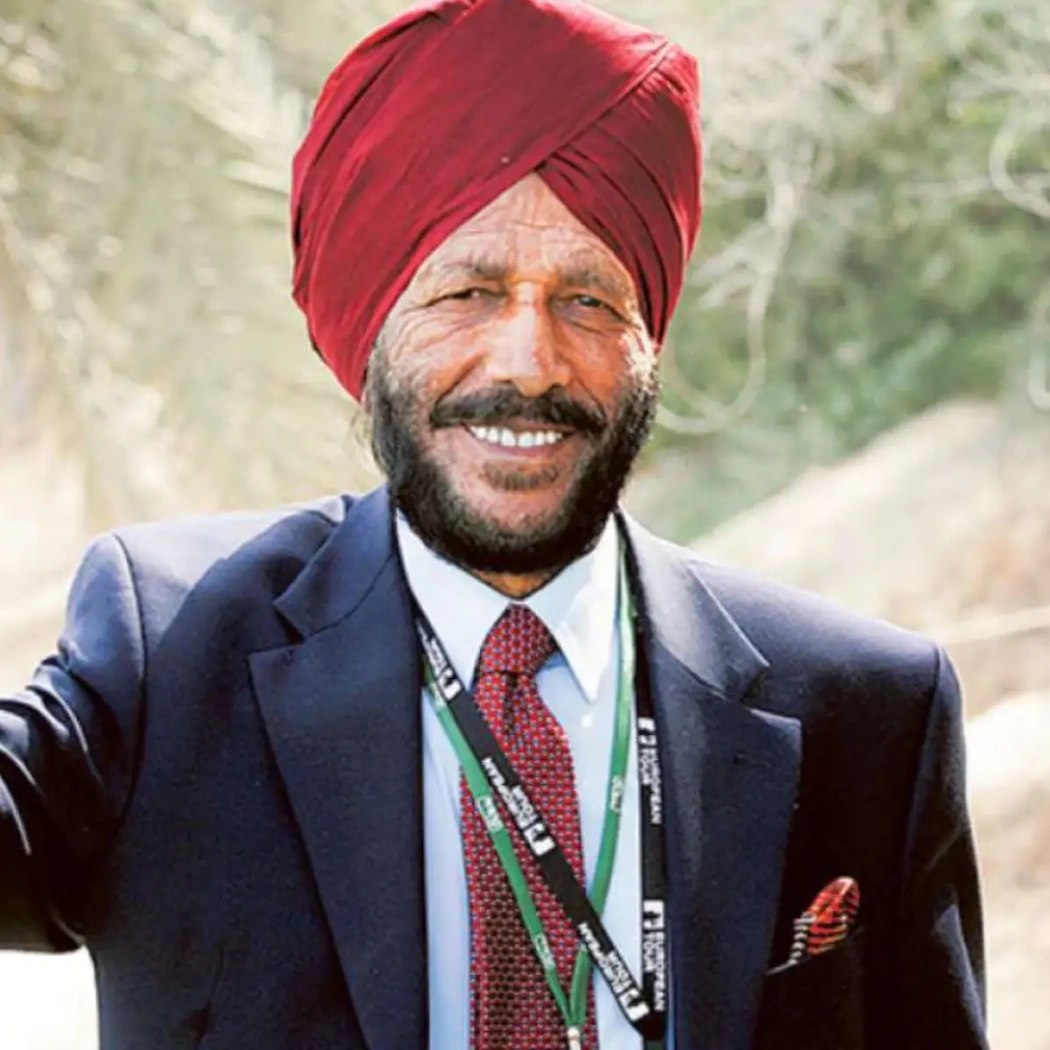
Milkha Singh’s Core Principles
| Principle | Description |
|---|---|
| Discipline Above All | “Success comes from daily discipline, not occasional effort” |
| Never Give Up | Overcame partition trauma to become champion |
| Represent Nation | Ran for India’s pride, not personal glory |
| Simple Living | Rejected commercialization, lived modestly |
| Give Back | Donated film rights money to charity |
| Hard Work | Trained 6-8 hours daily at peak |
| Mental Strength | “Body follows the mind” philosophy |
| Respect Rivals | Admired competitors, learned from defeats |
Training Philosophy
- Morning runs: 20-25 km daily
- Track work: Interval training, speed work
- Diet: High protein, traditional Indian food
- Rest: 8 hours sleep mandatory
- Mental preparation: Visualization techniques
- No shortcuts: Rejected performance-enhancing substances
Financial Philosophy
Milkha Singh net worth might not match modern athletes, but his financial wisdom was extraordinary:
| Financial Principle | Application |
|---|---|
| Service Over Money | Sold film rights for Re 1 |
| Charity First | Donated “Bhaag Milkha Bhaag” profits |
| Simple Lifestyle | No luxury cars or mansions |
| Government Service | Chose steady pension over risky ventures |
| Family Security | Ensured children’s education |
| No Exploitation | Refused to commercialize his legacy |
| Legacy Over Wealth | Focused on inspiration, not bank balance |
Quote: “I sold the rights for ₹1 because the film was not about money. It was about inspiring millions.”
Digital Presence & Contact (Historical)
| Platform | Status | Details |
|---|---|---|
| Social Media | Minimal | Didn’t actively use social media |
| Fan pages only | No official verified account | |
| None | Pre-social media era athlete | |
| None | Not personally active | |
| Website | Memorial sites | Created after death |
| Not public | Family maintained privacy | |
| Public Contact | Through institutions | Punjab Sports Department |
| Media Appearances | Occasional | Interviews, documentaries |
| Autobiography | “The Race of My Life” (2013) | Co-written with Sonia Sanwalka |
Note: Milkha Singh belonged to an era before social media. His presence was felt through his achievements, not digital followers.
Special Distinctions & First-Time Achievements
| Distinction | Details |
|---|---|
| First Indian Commonwealth Gold (Athletics) | 1958 Cardiff Games, 440 yards |
| Only Indian to Break Olympic Track Record | 1960 Rome (pre-games record) |
| First “Flying Sikh” | Nickname from Pakistan President (1960) |
| National Record Holder (38 years) | 400m record stood 1960-1998 |
| First Indian 400m Finalist at Olympics | 1960 Rome Games |
| Only Indian Double Asian Games Gold (200m & 400m) | 1958 Tokyo |
| First Athlete with Bollywood Biopic | “Bhaag Milkha Bhaag” (2013) |
| Partition Survivor to Champion | Overcame 1947 tragedy |
| Sold Film Rights for Re 1 | Ultimate humility |
| Honorary Captain | Rare military honor for athlete |
Educational Impact & Mentorship
Milkha Singh’s Contribution to Sports Education
| Initiative | Impact |
|---|---|
| Director of Sports (Punjab) | Promoted athletics in schools across Punjab |
| Athlete Mentorship | Guided young runners throughout career |
| Milkha Singh Charitable Trust | Supported underprivileged athletes |
| Motivational Talks | Inspired thousands through speeches |
| Autobiography | “The Race of My Life” educated millions |
| Film Inspiration | “Bhaag Milkha Bhaag” reached 100+ million people |
| Sports Infrastructure | Advocated for better training facilities |
| Scholarship Support | Used earnings to fund athlete education |
Message to Young Athletes
Milkha Singh’s Advice:
- “Practice until you cannot get it wrong”
- “Your only competition is yourself from yesterday”
- “Champions are made in training, not in competition”
- “Discipline is doing what needs to be done, even when you don’t want to”
Detailed Biography
Early Life: From Tragedy to Triumph
Milkha Singh was born on November 20, 1929, in Govindpura, a small village near Muzaffargarh in Punjab Province of British India (now in Pakistan). He was one of 15 siblings in a Sikh Rathore Rajput family. His father was a farmer, and the family lived a simple, rural life.
The turning point came in 1947 during the Partition of India. At just 17-18 years old, Milkha witnessed the brutal murder of his parents, brother, and two sisters. The horror of seeing his family killed haunted him throughout his life. He escaped the violence and traveled to Delhi as a refugee, traumatized and alone.
In Delhi, young Milkha lived with his married sister Ishvar briefly. Desperate and hungry, he once traveled ticketless on a train and was imprisoned at Tihar Jail. His sister sold her jewelry to secure his release. He then spent time in a refugee camp at Purana Qila and a resettlement colony in Shahdara, living in extreme poverty.
Milkha Singh net worth at this stage? Zero. He had nothing but the clothes on his back and painful memories.
Army Life: Discovery of Talent
In 1951, after three failed attempts, Milkha finally succeeded in joining the Indian Army. This was the moment that changed everything. Posted to the Electrical Mechanical Engineering Centre in Secunderabad, he participated in a cross-country race and discovered his extraordinary running ability.
His superior officer, Havaldar Gurdev Singh, noticed his talent and began coaching him. The army provided structure, discipline, nutrition, and most importantly—purpose. For the first time since Partition, Milkha had hope.
Rise to Glory: The Golden Era (1956-1964)
1956 – Melbourne Olympics: Milkha’s first Olympics. Though he didn’t medal, he gained invaluable international experience.
1958 – The Breakthrough Year:
- Won Gold in 200m and 400m at National Games (Cuttack)
- Won Double Gold at Asian Games (Tokyo) – 200m and 400m
- Commonwealth Games Gold (Cardiff) – 440 yards in 46.6 seconds
- Became India’s first Commonwealth athletics gold medalist
This year significantly boosted Milkha Singh net worth through prize money and national recognition.
1959 – National Hero:
- Awarded Padma Shri, India’s fourth-highest civilian honor
- Became a household name across India
1960 – The Year of Glory and Heartbreak:
- PM Jawaharlal Nehru personally requested him to race in Pakistan
- Defeated Pakistan’s champion Abdul Khaliq in Lahore
- President Ayub Khan said: “You didn’t run, you flew” – thus “Flying Sikh” was born
- Won Gold at British AAA Championships (London)
- Rome Olympics: The race that defined his legacy
The Rome Olympics: Glory and Regret
The 1960 Rome Olympics 400m final remains the most talked-about race in Indian athletics history. Milkha entered as a favorite. He led brilliantly until the 200m mark, then made a tactical error—he eased off, thinking he couldn’t maintain the pace.
American Otis Davis and German Carl Kaufmann overtook him in the final stretch. The photo-finish showed:
- Otis Davis – 44.9 sec (World Record)
- Carl Kaufmann – 44.9 sec (World Record)
- Malcolm Spence – 45.5 sec
- Milkha Singh – 45.73 sec (National Record)
He missed bronze by 0.1 second. This became both his greatest achievement and his biggest regret. The national record stood for 38 years—an incredible testament to his speed.
1962 – Asian Games (Jakarta):
- Gold in 400m
- Gold in 4x400m relay
- Continued dominance in Asia
1964 – Tokyo Olympics:
- His final Olympics
- Competed in 400m and 4x100m relay
Post-Athletic Career: Service to Nation
After retiring from competitive athletics, Milkha served as Director of Sports in the Punjab Education Department. He dedicated decades to promoting sports among youth. His government position provided steady income, contributing to Milkha Singh net worth through salary and pension.
He lived a simple life in Chandigarh with his wife Nirmal Kaur and four children. Unlike modern athletes, he never pursued commercial endorsements aggressively.
The Autobiography and Film
In 2013, at age 84, Milkha co-wrote his autobiography “The Race of My Life” with writer Sonia Sanwalka. The book became a bestseller, adding to Milkha Singh net worth through royalties.
The same year, Bollywood released “Bhaag Milkha Bhaag” starring Farhan Akhtar. The film was a massive hit, earning over ₹200 crore at the box office.
But here’s the remarkable part: Milkha sold the film rights for just Re 1 (one rupee).
He insisted all proceeds go to the Milkha Singh Charitable Trust to support underprivileged athletes. This act of generosity defined his character—Milkha Singh net worth was never about money, but about legacy.
Final Years and Death
Milkha Singh lived a peaceful, healthy life well into his 90s. He maintained a daily walking routine and stayed engaged with sports administration.
In June 2021, during India’s devastating second COVID-19 wave, both Milkha and his wife Nirmal contracted the virus. Nirmal died on June 13, 2021. Five days later, on June 18, 2021, Milkha Singh passed away at age 91 from COVID-19 complications.
The nation mourned. Prime Minister Narendra Modi, sports stars, and millions of citizens paid tribute to the Flying Sikh.
At the time of his death, Milkha Singh net worth was estimated at ₹10-15 crore—modest by modern athlete standards, but earned with dignity and integrity.
Recent Developments (2021-2025)
| Year | Event | Significance |
|---|---|---|
| June 2021 | Death of Milkha Singh | End of an era in Indian athletics |
| 2021-2022 | National Mourning | Tributes from across India and world |
| 2022 | Memorial Services | Statue proposals, stadium naming ceremonies |
| 2023 | Milkha Singh Charitable Trust Activities | Continued support for athletes |
| 2024 | Documentary Releases | New films celebrating his legacy |
| 2025 | Permanent Exhibitions | Museums featuring his life and achievements |
Conclusion
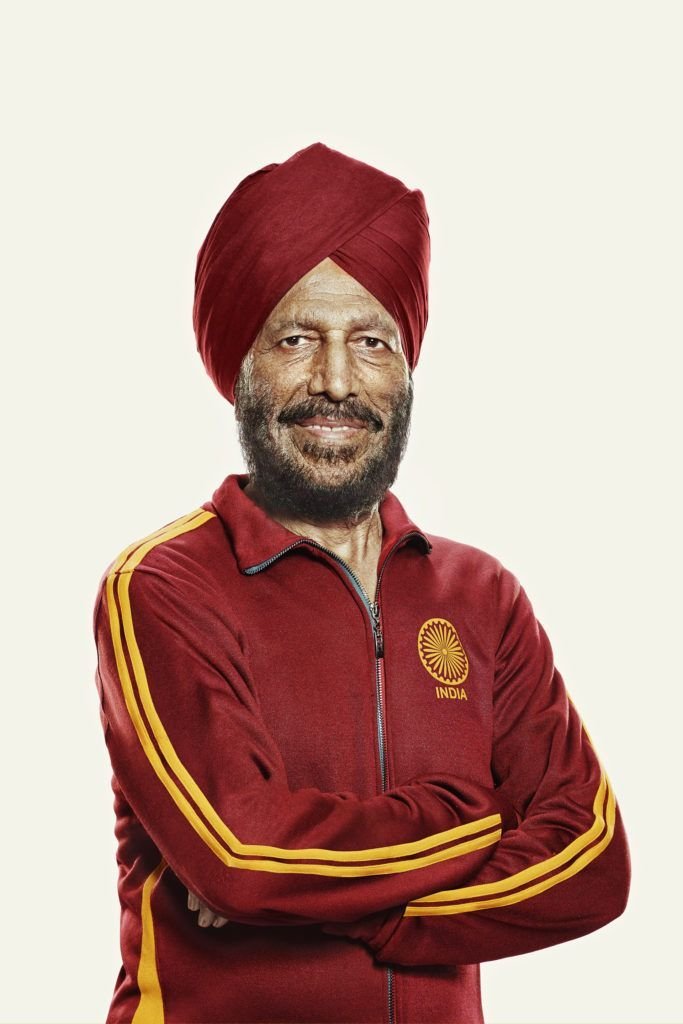
Milkha Singh’s life was a powerful journey from hardship to glory, rising from refugee camps to become India’s greatest track legend. While Milkha Singh net worth was modest at ₹10–15 crore, his real wealth lay in the millions he inspired, the records he set, and the legacy he left behind. Through his humility, charity, films, and books, the Flying Sikh continues to motivate generations. Though he passed away in 2021, his spirit lives on in every athlete who dreams of representing India.
Rest in Peace, Milkha Singh Ji. Your race is complete, but your legend runs forever.
Also Read: Jyothi Yarraji, Tina Dabi Award,Gaurav Taneja net worth
Frequently Asked Questions
1. What was Milkha Singh’s net worth at the time of his death?
Milkha Singh net worth at the time of his death in 2021 was estimated at ₹10-15 crore ($1.2-1.8 million). Some sources suggest higher figures (₹42-83 crore), but ₹10-15 crore is the most reliable estimate based on his known income sources.
2. How did Milkha Singh earn his wealth?
Milkha Singh net worth came from:
- Indian Army salary and pension (40-50%)
- Government sports awards and prize money (15-20%)
- Book royalties from “The Race of My Life” (15-20%)
- Director of Sports position salary (10-15%)
- Public speaking and appearances (5-10%)
3. Why was Milkha Singh called “The Flying Sikh”?
Milkha Singh got the nickname “Flying Sikh” from Pakistan President Ayub Khan in 1960. After defeating Pakistan’s champion Abdul Khaliq in Lahore, Khan told him: “You didn’t run today, you flew.” The name stuck and became his identity.
4. Did Milkha Singh win an Olympic medal?
No, Milkha Singh never won an Olympic medal. His closest finish was 4th place in the 400m final at the 1960 Rome Olympics, missing bronze by just 0.1 second. However, his time of 45.73 seconds set a national record that stood for 38 years.
5. What is Milkha Singh’s most famous achievement?
Milkha Singh’s most famous achievements are:
- Gold Medal at 1958 Commonwealth Games (India’s first athletics gold)
- 4th place at 1960 Rome Olympics (45.73 sec national record)
- Four Gold Medals at Asian Games (1958, 1962)
- National record that stood for 38 years (1960-1998)
6. Who was Milkha Singh’s wife?
Milkha Singh was married to Nirmal Kaur (Nirmal Milkha Singh), who was the former captain of the Indian women’s volleyball team. She died on June 13, 2021, just 5 days before Milkha Singh, also from COVID-19 complications.
7. How many children did Milkha Singh have?
Milkha Singh had 4 children: one son (Jeev Milkha Singh, professional golfer) and three daughters. He also adopted the son of Havildar Bikram Singh, a Kargil War martyr, in 1999.
8. What is Jeev Milkha Singh’s net worth?
Jeev Milkha Singh net worth is estimated at ₹200-250 crore, significantly higher than his father’s. Jeev earned his wealth through a successful professional golf career on international tours.
9. Why did Milkha Singh sell film rights for ₹1?
Milkha Singh sold the rights to “Bhaag Milkha Bhaag” for just Re 1 (one rupee) because he wanted the film to inspire people, not enrich him. He insisted all proceeds go to the Milkha Singh Charitable Trust to support underprivileged athletes.
10. When and how did Milkha Singh die?
Milkha Singh died on June 18, 2021, at age 91, from COVID-19 complications in Chandigarh, India. His wife had died from the same disease just 5 days earlier.
Explore more blogs at: Officers Details