
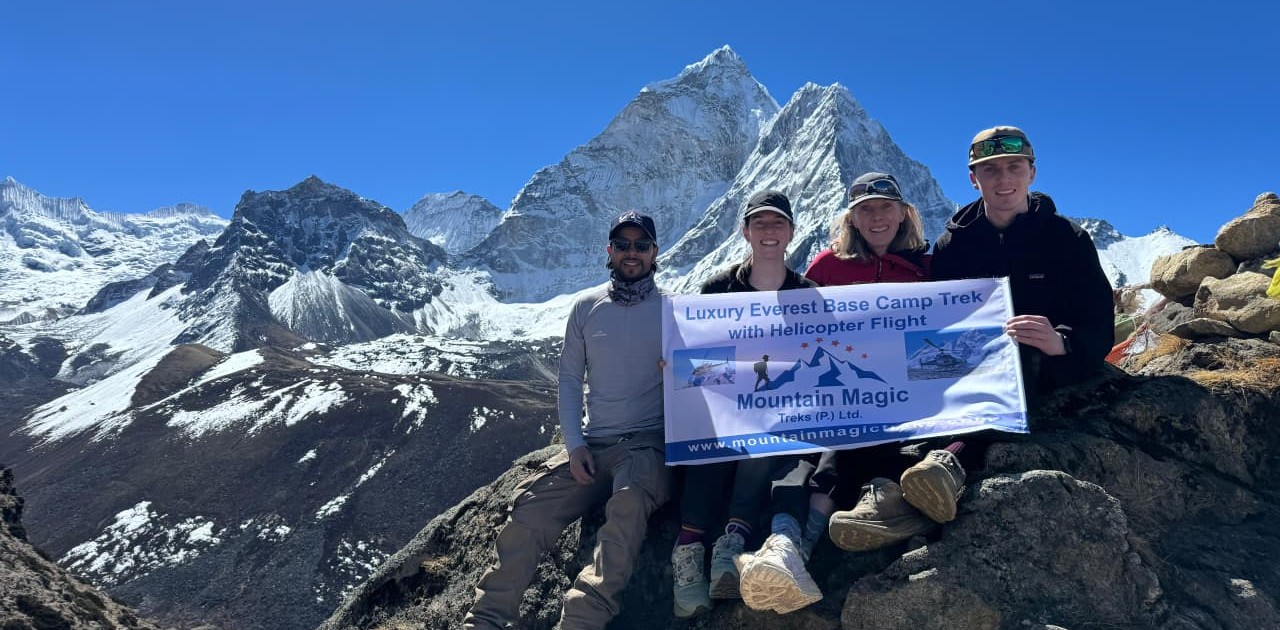
Walking toward Mount Everest is an experience that stays with you. The trail takes you far away from busy roads and crowded cities and into a world of mountain villages, quiet forests, rocky paths, and huge Himalayan peaks.
The Everest Base Camp Trek with helicopter return is designed for travelers who want to experience this famous journey on foot but do not want to spend several extra days walking back. After reaching the Everest region, you can return by helicopter, subject to weather and safe flying conditions.
For first-time trekkers, knowing what the journey feels like can make preparation much easier.
Your Trek Starts Before You Reach the Trail
Your Everest adventure begins in Kathmandu.
This is your chance to organize your gear, check your clothing, and prepare mentally for several days of walking.
Pack for Use, Not for Show
You do not need to carry your entire closet.
Choose practical clothing that can handle cold, wind, rain, and changing temperatures.
Useful items include:
-
Comfortable trekking shoes
-
Warm layers
-
Waterproof jacket
-
Gloves and hat
-
Sunglasses
-
Sunscreen
-
Water bottle
-
Small daypack
-
Personal medicines
A lighter bag makes every walking day easier.
Lukla Changes Everything
After reaching Lukla, the city disappears behind you.
The trail begins among green hills and small mountain settlements.
Enjoy the Easier Beginning
The early route gives your body time to settle into trekking.
You will cross bridges, follow rivers, and walk through forested areas.
Do not worry about reaching the destination quickly. These first days are part of the experience.
Learn to Walk at a Steady Pace
New trekkers often make the same mistake: they walk too fast at the beginning.
It may feel easy at lower elevations, so they use too much energy.
Slow Is Not Weak
A comfortable pace becomes more important as you climb.
Take shorter steps on uphill sections and breathe naturally.
If another trekker moves faster, let them go.
The Everest Base Camp Trek with helicopter return is not a competition. Reaching the high sections with enough energy matters far more than arriving early.
Namche Gives You Time to Adjust
Namche Bazaar is one of the most important places on the route.
The town sits high above the surrounding valleys and offers shops, cafes, lodges, and mountain views.
Use the Rest Day Wisely
The acclimatization day is not wasted time.
You can take a short hike around the area, explore the town, or rest at your lodge.
The purpose is to help your body become more comfortable with the increasing altitude.
Notice the People Along the Trail
The Everest region is not simply a mountain landscape.
It is home to communities that have adapted to life in difficult terrain.
Respect the Local Way of Life
You may see porters carrying supplies, local people working around their homes, and animals moving goods along the trail.
Prayer flags and Buddhist symbols are common.
Ask before taking close-up photographs of people, and follow local customs when visiting religious places.
Tengboche Offers More Than Views
Tengboche is famous for its monastery and beautiful mountain surroundings.
It is also a good reminder that the Everest journey has a strong cultural side.
Take a Moment to Stop
You do not need to keep moving all the time.
Enjoy a warm drink.
Look at the mountains.
Walk around the village.
Listen to the wind.
These quiet breaks can make the journey feel more personal.
Dingboche Means Thinner Air
As you continue toward Dingboche, the environment becomes more open.
Trees become less common, and rocky slopes start to dominate the scenery.
Expect Your Body to Work Harder
At higher elevations, normal activities require more effort.
You may breathe harder while walking uphill.
That does not automatically mean something is wrong.
Slow down, take breaks, and pay attention to how you feel.
If you develop serious or unusual symptoms, tell your guide immediately.
Keep Food and Water a Priority
Long mountain days use more energy than you may expect.
It is easy to focus so much on reaching the next village that you forget basic needs.
Eat Even When You Are Not Very Hungry
Simple meals can provide the energy needed for trekking.
Carry small snacks for the trail.
Drink water regularly rather than waiting until you are very thirsty.
Good hydration and regular meals can make a noticeable difference to your energy.
Gorakshep Brings You Close to Your Goal
Gorakshep is one of the final stopping points before Everest Base Camp.
By this stage, you may feel tired, but the destination is close.
Break the Final Walk Into Sections
Do not think about the entire distance at once.
Focus on reaching the next point.
Then take a short break.
Continue again.
This simple approach can make a demanding high-altitude walk feel easier to manage.
Make Time for Kala Patthar
Kala Patthar reaches approximately 5,545 meters and is known for its impressive views toward Everest.
The climb is challenging because of the altitude.
The View Is the Reward
Many trekkers begin early to catch the mountain landscape in morning light.
The cold can be intense, so warm clothing is essential.
Move slowly and follow your guide’s advice.
Return by Helicopter
The return journey is where this trek takes a different direction.
After completing the main trekking section, the Everest Base Camp Trek with helicopter return allows travelers to leave the mountains by air rather than walking the entire route back.
Watch the Landscape From Above
From the ground, the valleys can feel enormous.
From a helicopter, you can see how everything connects.
Trails become narrow lines.
Villages look tiny.
Ridges and glaciers spread across the landscape.
After walking through the region for days, seeing it from above can be one of the most memorable parts of the trip.
Weather Can Change Your Schedule
Mountain flights depend on safe conditions.
Clouds, wind, visibility, and other weather factors can affect helicopter operations.
Leave Room for Delays
Do not schedule an important connecting flight too close to your expected helicopter arrival.
Extra time gives you more freedom if weather causes a change.
This is especially important when traveling in remote mountain areas.
What Makes the Experience Worth It?
The Everest Base Camp Trek with helicopter return combines physical effort with convenience.
You still experience the trail, villages, culture, altitude, and mountain scenery.
But you avoid several days of walking back.
You Get Two Views of Everest
Walking gives you the close-up experience.
You notice the people, paths, rivers, homes, and small details.
The helicopter gives you the larger picture.
You see the valleys and mountains as one connected landscape.
That combination makes the journey feel complete.
Final Thoughts
The Everest Base Camp Trek with helicopter return is a strong option for travelers who want a real Himalayan trekking experience without spending extra days retracing the route.
The journey takes you from Lukla through Namche Bazaar, Tengboche, Dingboche, Lobuche, and Gorakshep before reaching Everest Base Camp. Along the way, you experience changing landscapes, Sherpa culture, mountain life, and the challenges of high-altitude trekking.
Kala Patthar adds another impressive viewpoint.
Then the helicopter provides a completely different ending.
Prepare your body, pack practical gear, respect the altitude, and keep your schedule flexible. Most importantly, do not rush through the experience. The best part of Everest is not just reaching Base Camp. It is everything you see and feel while getting there.
Frequently Asked Questions
Is the Everest Base Camp Trek with helicopter return good for first-time trekkers?
Yes, if you prepare properly and understand that the route involves long walking days and high altitude.
How can I prepare before the trek?
Build your walking endurance with regular long walks, hills, stairs, and basic leg exercises.
Why are acclimatization days important?
They give your body time to adjust before you move to higher elevations.
What is the height of Kala Patthar?
Kala Patthar is approximately 5,545 meters above sea level.
Can the helicopter return be delayed?
Yes. Mountain weather and visibility can affect helicopter operations.
Should I plan extra time after returning?
Yes. Keeping a flexible schedule is wise because mountain flights cannot always operate exactly as expected.