
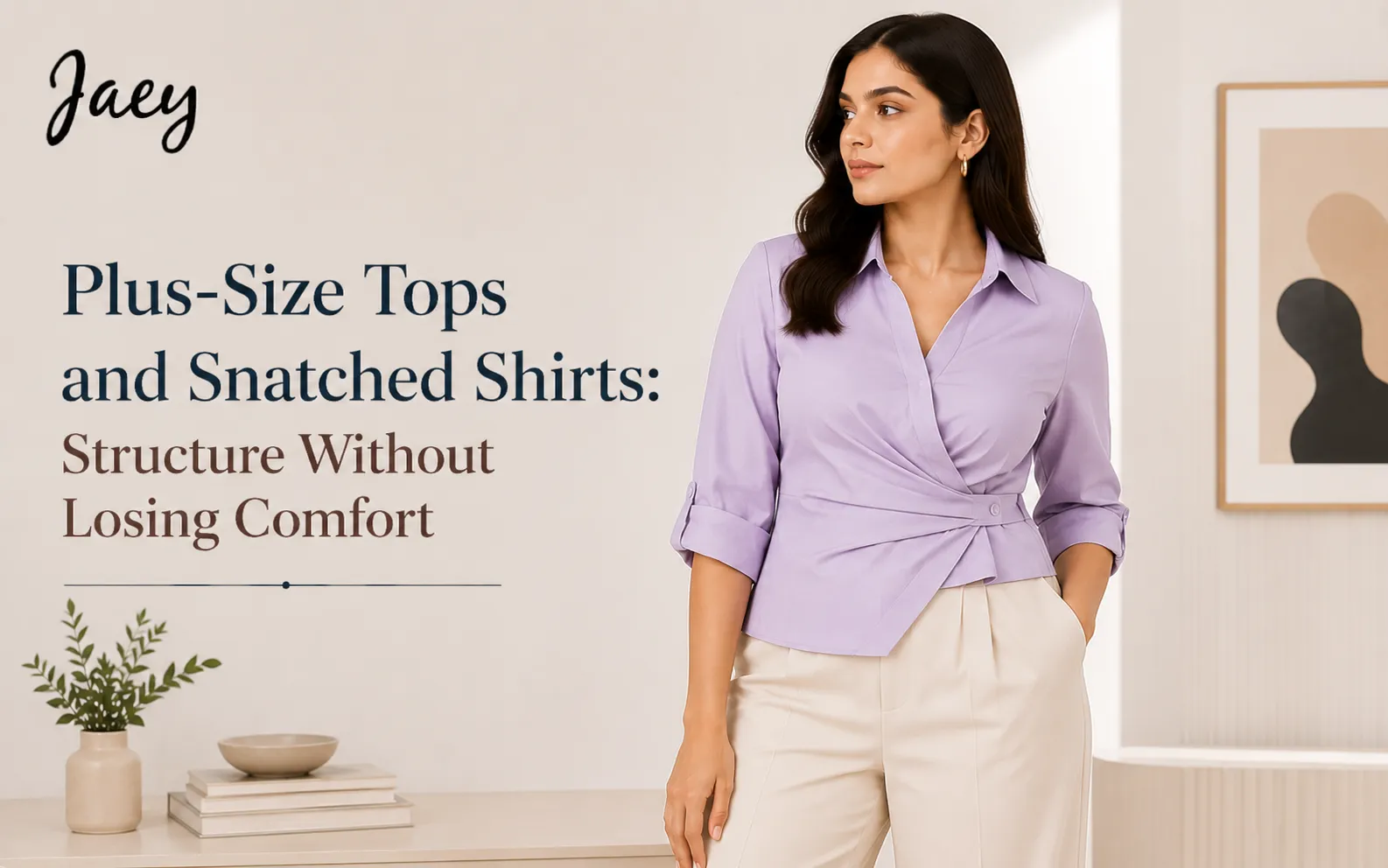
Structure is often confused with tightness. A structured top follows the body through cut, seams and fabric. A tight top simply has less room. The difference becomes obvious after several hours of sitting, reaching and moving.
For plus-size shoppers, this distinction matters. A garment can define the waist and still allow breathing room. It can hold its shape without pressing into the skin. Good design works with the body instead of asking the body to fit a fixed template.
Start with accurate measurements
Shopping for plus size tops for women is easier when measurements are current. Bust, waist and hip measurements are useful, but shoulder width, upper-arm circumference and preferred garment length can also affect fit.
Compare the size chart with a top that already fits well. Measure the garment when laid flat. This shows how much ease is comfortable. A body measurement alone does not reveal whether a top is designed to fit closely or loosely.
Size labels vary between brands and even between different cuts from the same brand. Choosing a larger number is not a failure. The aim is to find a garment that sits correctly and feels dependable.
Understand how a shaped shirt works
A snatched shirt for women may use crossing panels, darts, seams or a shaped waist to create definition. These features can reduce the need for a tight belt or a full tuck.
Look at where the shaping begins. Bust darts should point toward the fullest area without ending directly on it. Crossing panels should lie flat and remain secure while sitting. The waist should feel defined but should not pull the buttons or distort the hem.
Shaping should continue smoothly at the back. Deep horizontal lines can indicate tightness. Excess fabric collecting above the waist may mean the length or curve does not match the body.
Check buttons, plackets and necklines
Buttoned shirts often fail first at the bust. Stand naturally and look for gaps. Then sit and move the arms. Fashion tape can provide temporary security, but it should not be required to make a new shirt wearable.
Hidden plackets create a clean front and may reduce visible pulling. Stretch fabric can help, though too much stretch sometimes makes buttons work harder rather than improving fit.
Necklines should remain in place when leaning forward. A wrap or crossed front needs enough overlap. If an inner layer is always required, consider whether that extra layer will be comfortable in warm weather.
Fabric decides whether structure feels comfortable
Woven fabric holds a sharper line than soft knit fabric. It may also provide less give. Blended fabric can offer both shape and movement when the weight is right.
Thin stretch material may cling to every line and lose recovery over time. Very stiff fabric can stand away from the body and feel restrictive at the armholes. Mid-weight fabric often gives the most useful balance for office wear.
Touch alone is not enough. Crush a small section in the hand to see how it creases. Hold it against light to check opacity. Move in the garment to hear whether the fabric rustles.
Decide how the top will be worn
A shaped shirt can work untucked if the hem is designed to finish cleanly. It may also sit well with high-rise trousers because the waist definition is already built in.
For a full tuck, check that the shirt is long enough to stay inside the waistband. For a partial tuck, choose a fabric that folds without creating a large lump. A top that is too short will need constant adjustment.
Under a blazer, the shoulders and sleeves should remain smooth. Large knots, ruffles or thick crossing panels may create bulk. Try the intended outer layer before deciding.
Build comfort into the working day
Comfort is not only softness. A very soft top that twists, rides up or loses shape can be frustrating. A slightly firmer garment that stays in place may feel better over eight hours.
Check temperature needs. Long sleeves may suit air-conditioning but feel warm during travel. Roll-up sleeves add flexibility when the tab and button are placed well.
Skin sensitivity matters too. Rough labels, exposed elastic and hard seams can become irritating. Inspect the inside, especially around the neck, armhole and waist.
Avoid buying only for the front view
Look at the side seam and back. A top may appear fitted from the front while riding up over the hips. A shaped waist may sit too high or too low for the torso.
Take a photograph from several angles if the trial-room mirror is limited. Natural posture gives a more honest view than standing unusually straight.
The right top should support movement and personal style without creating a list of restrictions. Plus-size dressing does not need to alternate between oversized garments and tight shaping. There is a useful middle ground: clean structure, accurate fit and enough ease for real life.
