
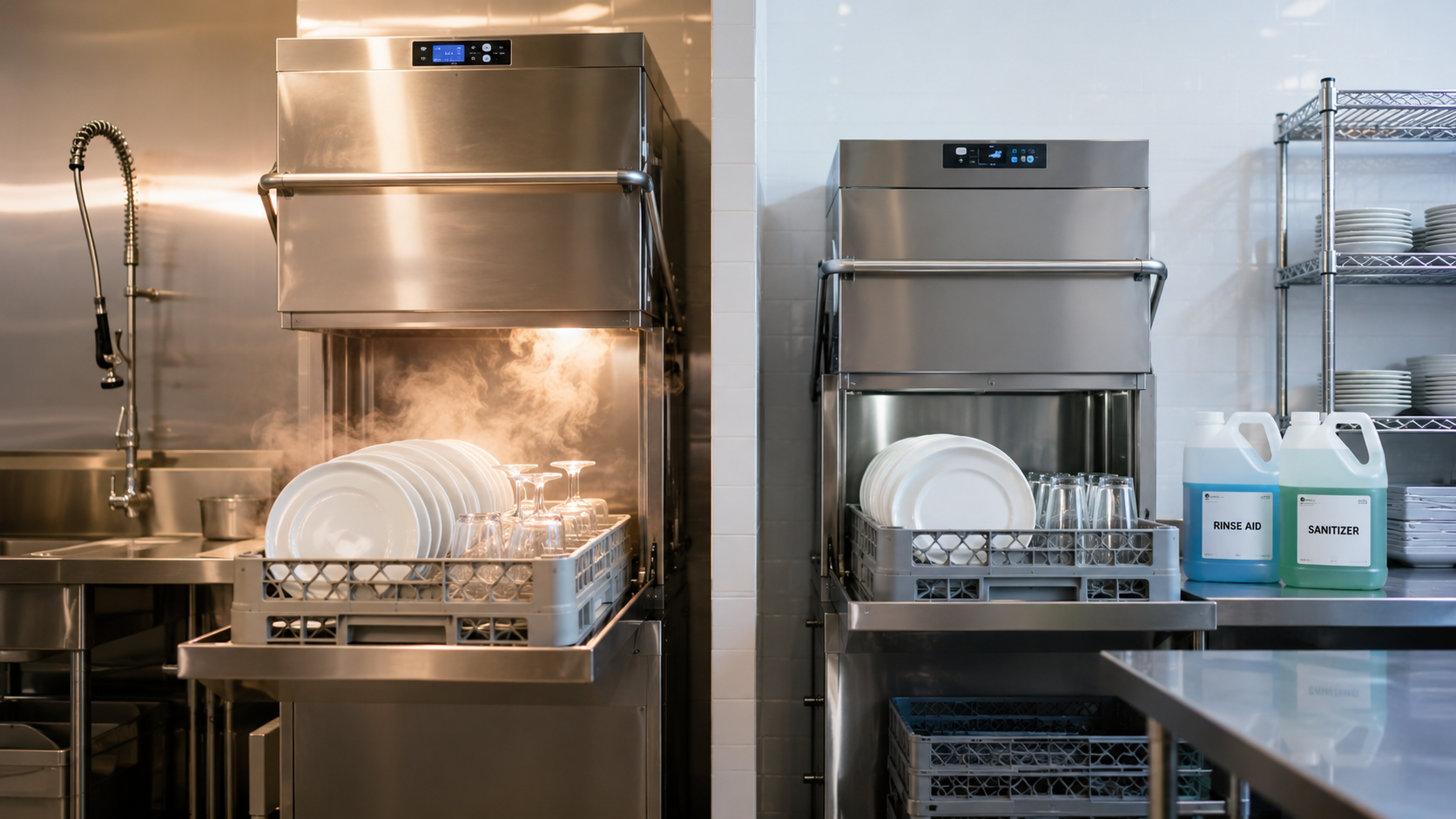
Choosing the right commercial dishwasher is not just about washing plates faster. For restaurants, cafes, bars, bakeries, schools, hotels, catering kitchens, and other foodservice businesses, a dishwasher affects sanitation, labor speed, utility costs, chemical usage, dishroom workflow, and even the way glassware and dishes look when they reach the customer.
One of the most important decisions is whether your kitchen needs a high-temp commercial dishwasher or a low-temp commercial dishwasher. Both types are designed for foodservice use, but they sanitize dishes in different ways. Understanding the difference can help you choose the right machine for your volume, space, budget, and operating needs.
What Is a High-Temp Commercial Dishwasher?
A high-temp commercial dishwasher uses very hot water to sanitize dishes, glassware, utensils, and kitchenware. These machines rely on high final rinse temperatures to kill bacteria and complete the sanitizing process.
In many commercial kitchens, high-temp dishwashers are preferred because they can produce excellent cleaning results, reduce chemical sanitizer usage, and help dishes dry faster after the rinse cycle. The high heat also helps remove grease, oils, and residue more effectively, which is especially useful in restaurants that serve fried foods, sauces, proteins, and heavy-use menu items.
High-temp machines often require a booster heater. A booster heater raises the incoming hot water to the required final rinse temperature. Some commercial dishwashers include a built-in booster, while others may require an external booster heater depending on the model and installation setup.
High-temp dishwashers are commonly used in full-service restaurants, hotels, cafeterias, banquet halls, commercial kitchens, and operations that need fast drying and a polished finish on plates, flatware, and glassware.
What Is a Low-Temp Commercial Dishwasher?
A low-temp commercial dishwasher uses chemical sanitizer instead of extremely hot rinse water to sanitize dishes. These machines still use hot water for washing, but the final sanitizing step depends on chemicals such as chlorine-based sanitizer or other approved sanitizing solutions.
Low-temp dishwashers are often selected because they may require less electrical demand than high-temp machines. Since they do not usually need to heat rinse water to the same extreme temperatures, they can be a practical option for kitchens with limited electrical capacity or older buildings where utility upgrades may be expensive.
However, low-temp machines require ongoing chemical sanitizer supply. Operators must monitor chemical levels, concentration, and proper usage to make sure the machine is sanitizing correctly. If the sanitizer runs out or is not dispensing properly, the dishwasher may clean dishes but fail to sanitize them.
Low-temp dishwashers are commonly used in bars, small restaurants, cafes, churches, concession areas, and foodservice operations that want a lower electrical demand and are comfortable managing chemical sanitizer.
High-Temp vs. Low-Temp Dishwashers: Main Differences
The biggest difference is the sanitizing method.
A high-temp dishwasher sanitizes with hot water. A low-temp dishwasher sanitizes with chemicals.
This single difference affects several parts of daily operation, including drying speed, utility requirements, chemical costs, dish quality, ventilation, and maintenance.
High-temp commercial dishwashers usually produce faster drying results because the dishes come out hotter. The heat helps water evaporate more quickly, which can reduce the need for towel drying. This is valuable in high-volume kitchens where staff need to move clean dishes back into service as fast as possible.
Low-temp machines may leave dishes cooler and wetter at the end of the cycle. This does not mean they are ineffective, but it can affect workflow. In some operations, dishes may need more time to air dry before stacking, storing, or returning to service.
High-temp machines may have higher electrical or gas demand, especially if a booster heater is required. Low-temp machines may have lower utility requirements, but they create an ongoing chemical cost. Over time, the better option depends on your volume, utility rates, chemical usage, and kitchen setup.
Which Type Cleans Better?
Both high-temp and low-temp commercial dishwashers can clean effectively when properly installed, maintained, and operated. The real difference is not simply “clean” versus “not clean.” The difference is how each machine achieves sanitation and how it performs in daily use.
High-temp dishwashers are often better for operations that handle heavy grease, proteins, sauces, and baked-on residue. The hotter water can help break down food soil more aggressively and improve drying performance. For restaurants that need plates, pans, utensils, and glasses to turn around quickly, high-temp models are often the stronger choice.
Low-temp dishwashers can also perform well, especially when dishes are properly scraped, pre-rinsed, and loaded. They are often a good fit for lighter-duty applications or kitchens where electrical capacity is a concern. The key is chemical management. If the sanitizer is not maintained at the correct concentration, performance can suffer.