
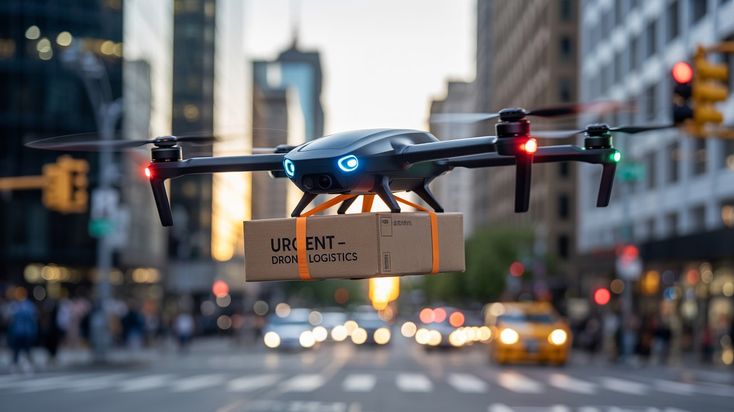
The Live•Aware SAR RDF Technology has been engineered to improve situational awareness during aerial Search and Rescue missions through advanced RF scanning capabilities. Through RF Detection for SAR Drone technology, rescue teams can gather valuable wireless signal intelligence and improve operational effectiveness during critical missions.
One of the key advantages of the Live•Aware SAR RDF Technology is its ability to detect wireless signal activity emitted from smartphones, smartwatches, BLE wearables, Bluetooth-enabled devices, and optionally WiFi devices. By integrating RF scanning into a mobile Android-compatible platform, SAR Drone operators gain real-time situational awareness during aerial rescue missions.
Unlike traditional aerial search technologies that rely heavily on cameras, thermal imaging, or direct visual observation, the Live•Aware SAR App provides actionable intelligence by detecting RF signals directly from wireless devices. This allows SAR teams to identify potential victims even when visual systems are obstructed by vegetation, terrain, darkness, weather conditions, or structural obstacles.
The Live•Aware SAR platform operates as a lightweight Radio Direction Finder that can be mounted directly onto SAR drones, DJI UAV platforms, rescue boats, tactical vests, mountain rescue gear, or emergency response vehicles. Because the platform runs directly on ruggedized Android handsets, organisations can deploy the technology rapidly without requiring expensive proprietary hardware.
One of the most important operational benefits of BLE-based Radio Direction Finding is its ability to function without network dependency. The system operates directly device-to-device, allowing SAR operators to detect broadcasting Bluetooth devices even in remote wilderness environments, mountains, forests, disaster zones, or maritime rescue scenarios where no cellular, GPS, or WiFi infrastructure exists.
The Live•Aware SAR RDF Technology also operates as a passive beacon detection system. Victims do not need to make emergency calls, activate distress beacons, or send text messages. Simply carrying an active Bluetooth-enabled device is sufficient for detection, significantly increasing rescue opportunities during critical Search and Rescue operations.
Drone-mounted RF scanning dramatically reduces operational search times by allowing UAV operators to sweep large search zones while continuously gathering wireless signal intelligence from the air. This improves aerial coverage efficiency and enables Search and Rescue teams to prioritise high-probability operational areas more effectively.
Another significant operational advantage of the Live•Aware SAR App is the AI-powered heatmap and line-of-bearing visualisation system. Instead of manually analysing raw RF data, SAR Drone operators receive intuitive visual guidance that directs teams toward detected signal sources in real time.
BLE-based Radio Direction Finding can overhear standard connectionless advertising packets without requiring active pairing with the target device. Because no direct connection is needed, the victim’s device consumes minimal battery power, maximising the operational rescue window and increasing the likelihood of successful recovery. These capabilities further strengthen RF Detection for SAR UAV operations by helping teams locate signals efficiently while preserving device battery life.
Conclusion: For organisations researching RDF for DJI Search and Rescue UAV, the Live•Aware SAR RDF Technology provides a highly scalable and operationally flexible Search and Rescue solution focused on reducing search time, increasing locate probability, improving aerial coverage efficiency, and reducing operator workload. Through BLE-based Radio Direction Finding, AI-powered heatmaps, passive beacon detection, RF scanning, and lightweight Android deployment, the platform enables modern SAR Drone and UAV teams to conduct faster and more effective aerial Search and Rescue operations.
